
37㎡のマンション住戸をオフィスへとリノベーションしたプロジェクトである。
建物は壁式RC構造で、既存住戸はもともと小さな面積でありながら、躯体壁によってさらに3つの空間に分節されていた。
計画では、ワークスペース、ミーティングルーム、ラウンジの3つの機能を割り当て、それぞれの独立性を保ちつつ、分節された空間同士が緩やかにつながる構成を目指した。小さく分断された空間という与件に対し、人の動きや視線、光や風、音や気配といった要素が必然的に「横断」することに着目し、その行為そのものを空間の質へと転化することをテーマとしている。
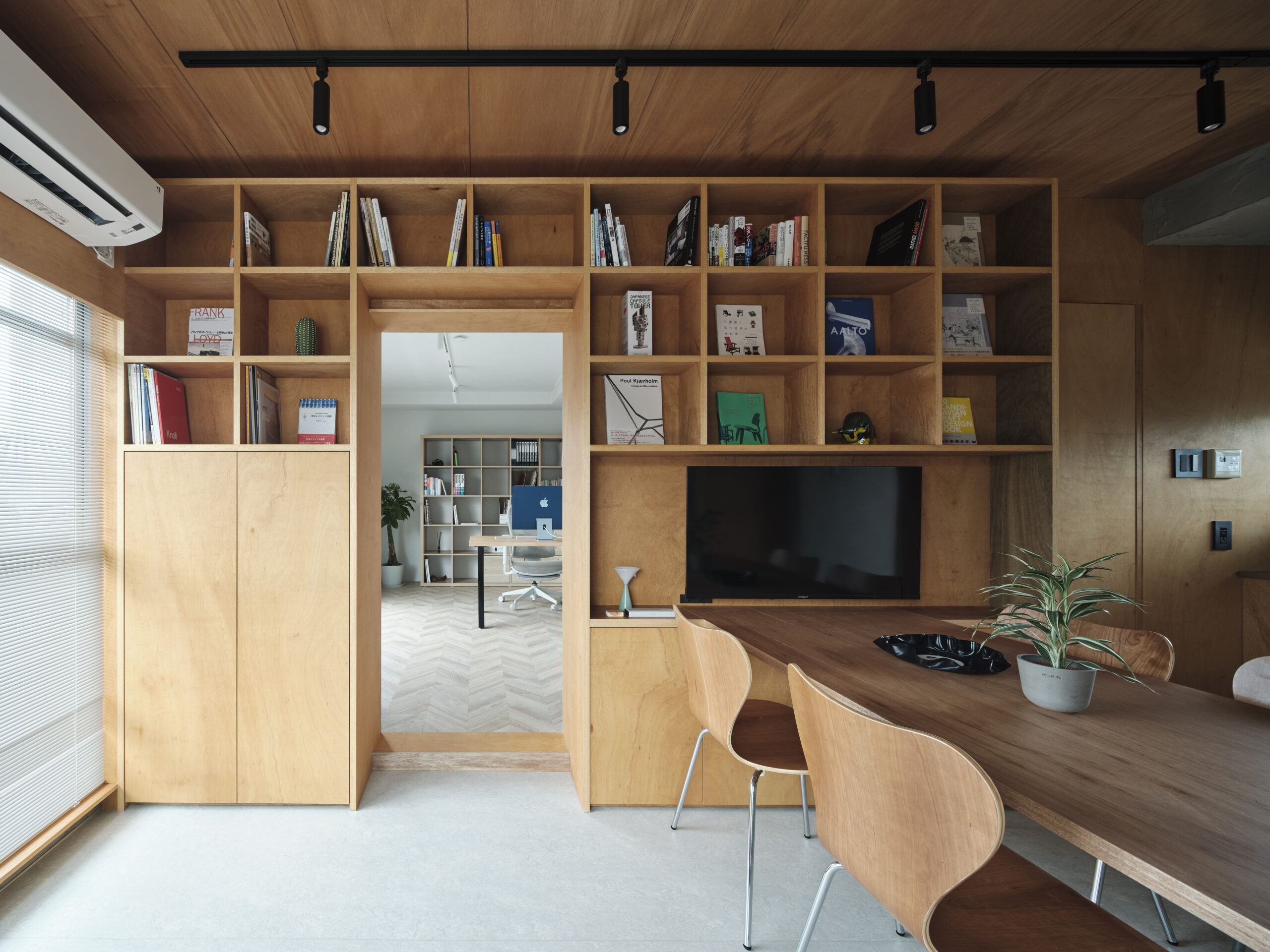
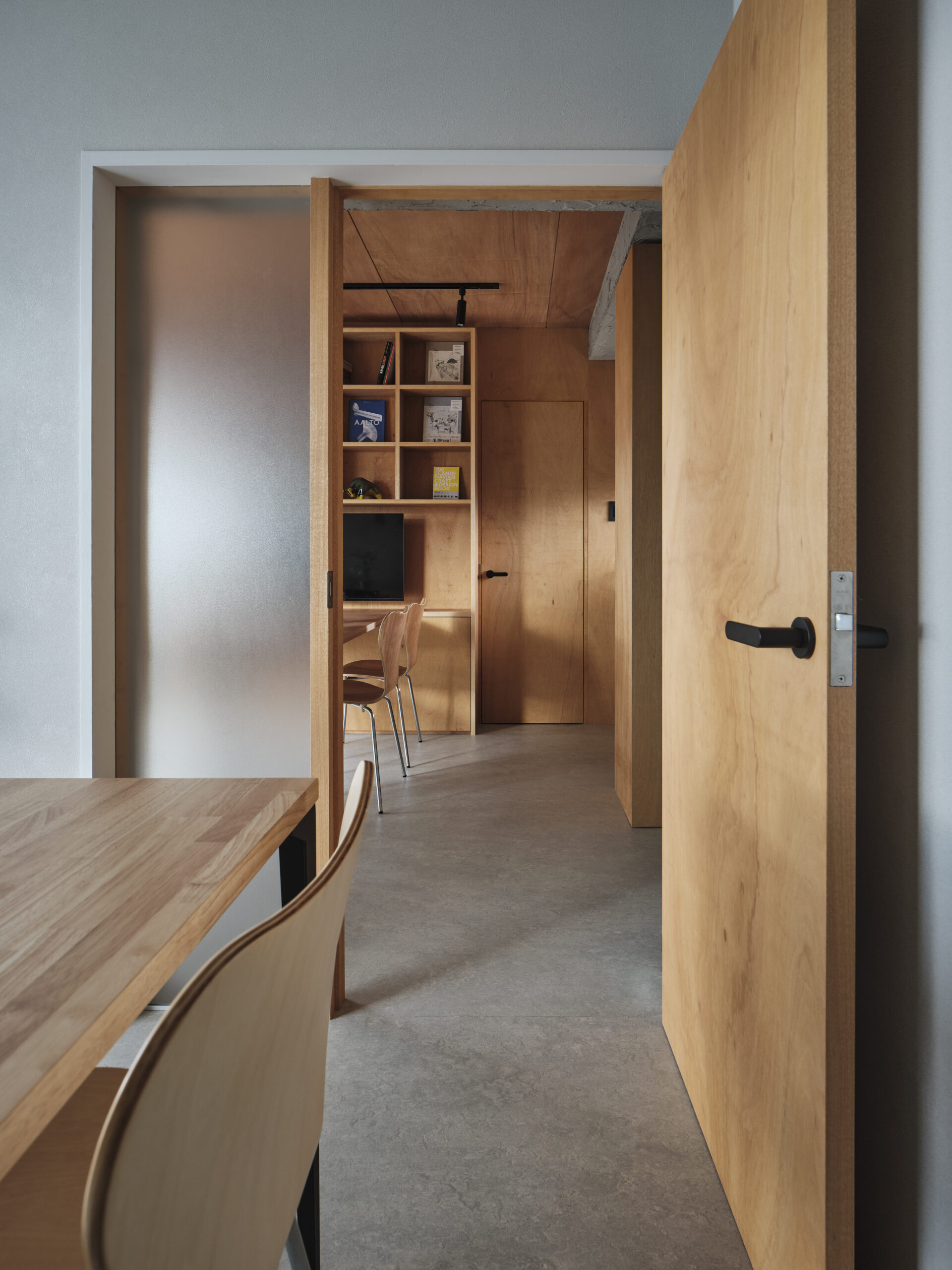
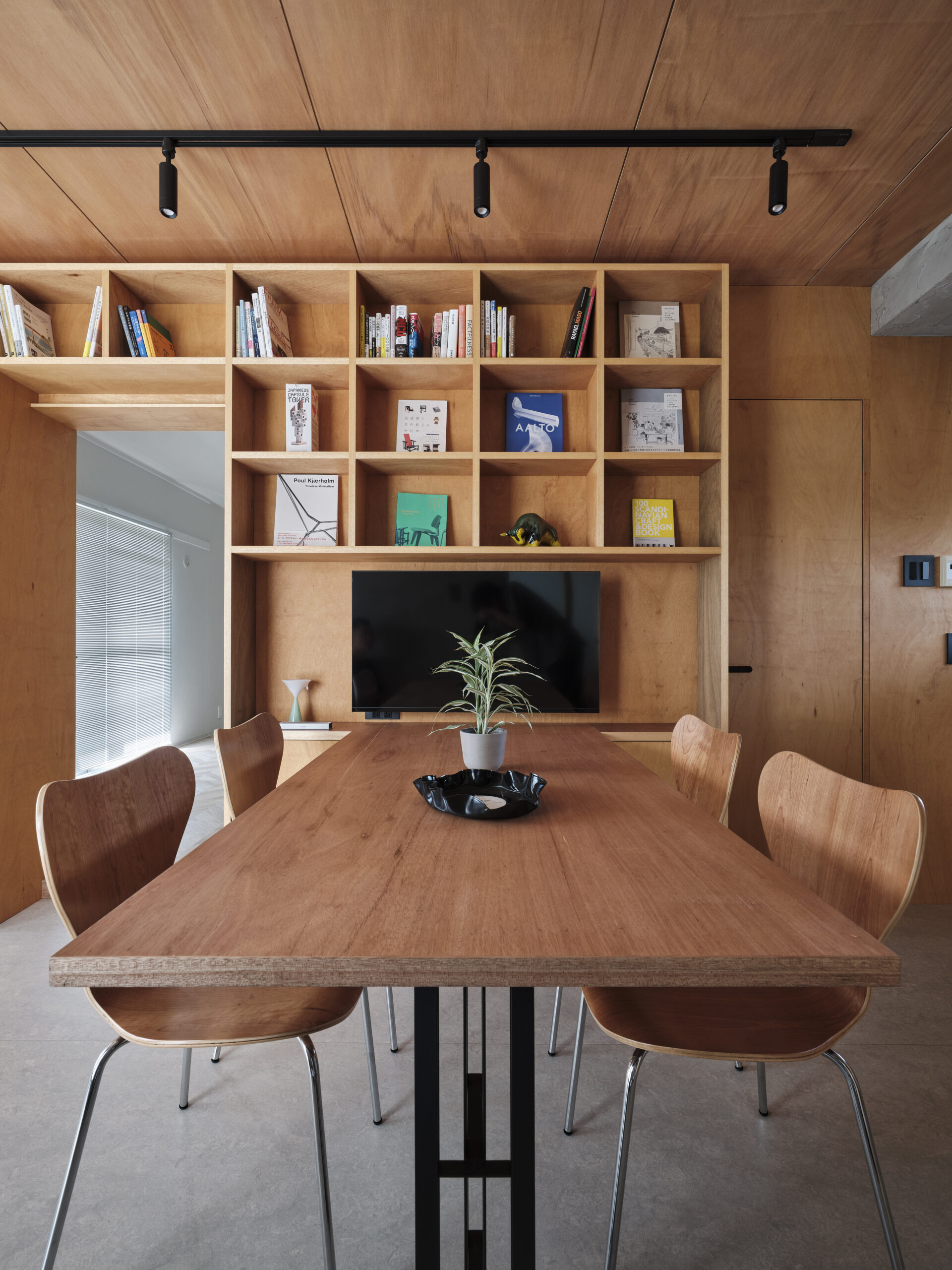
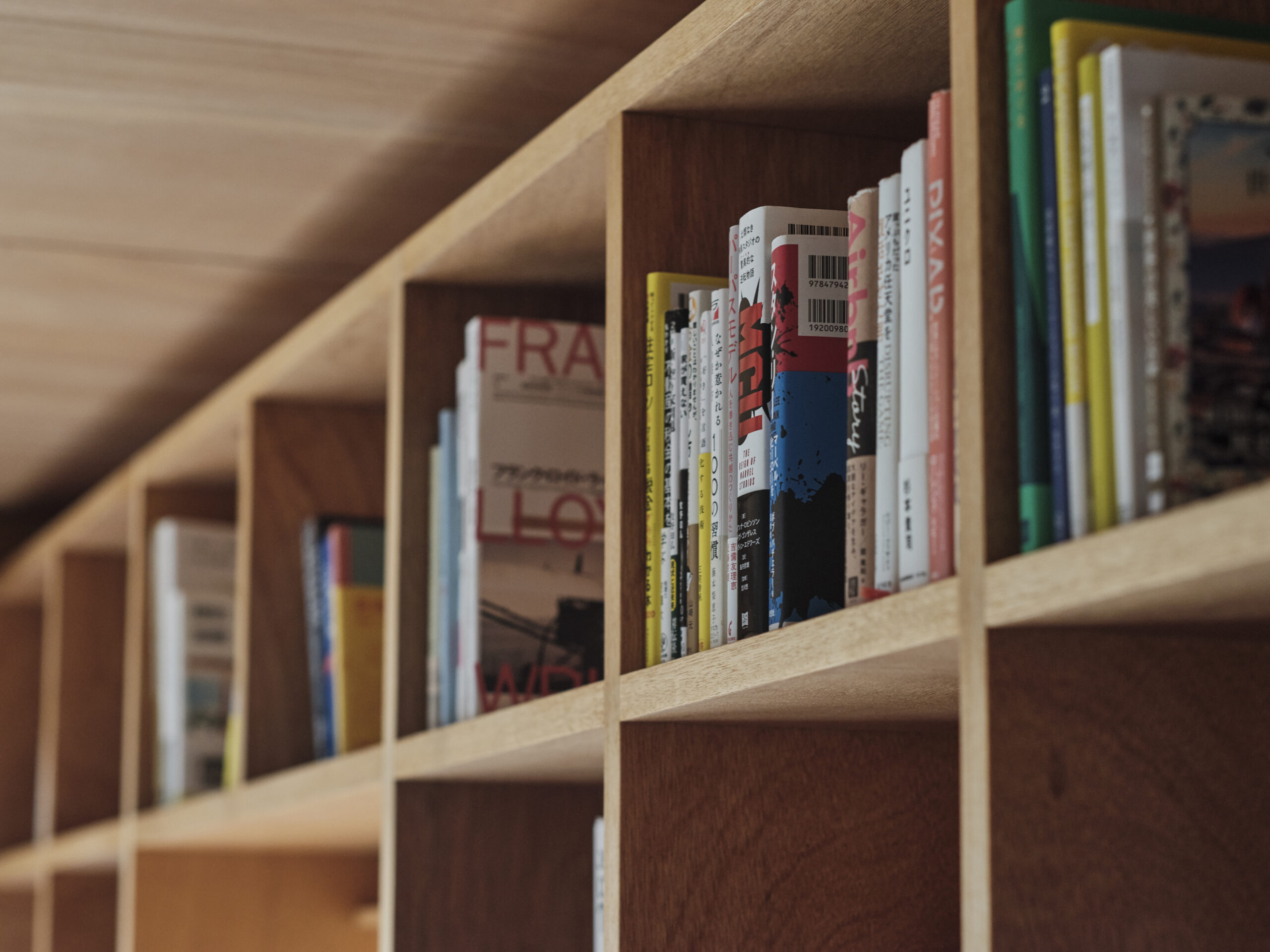
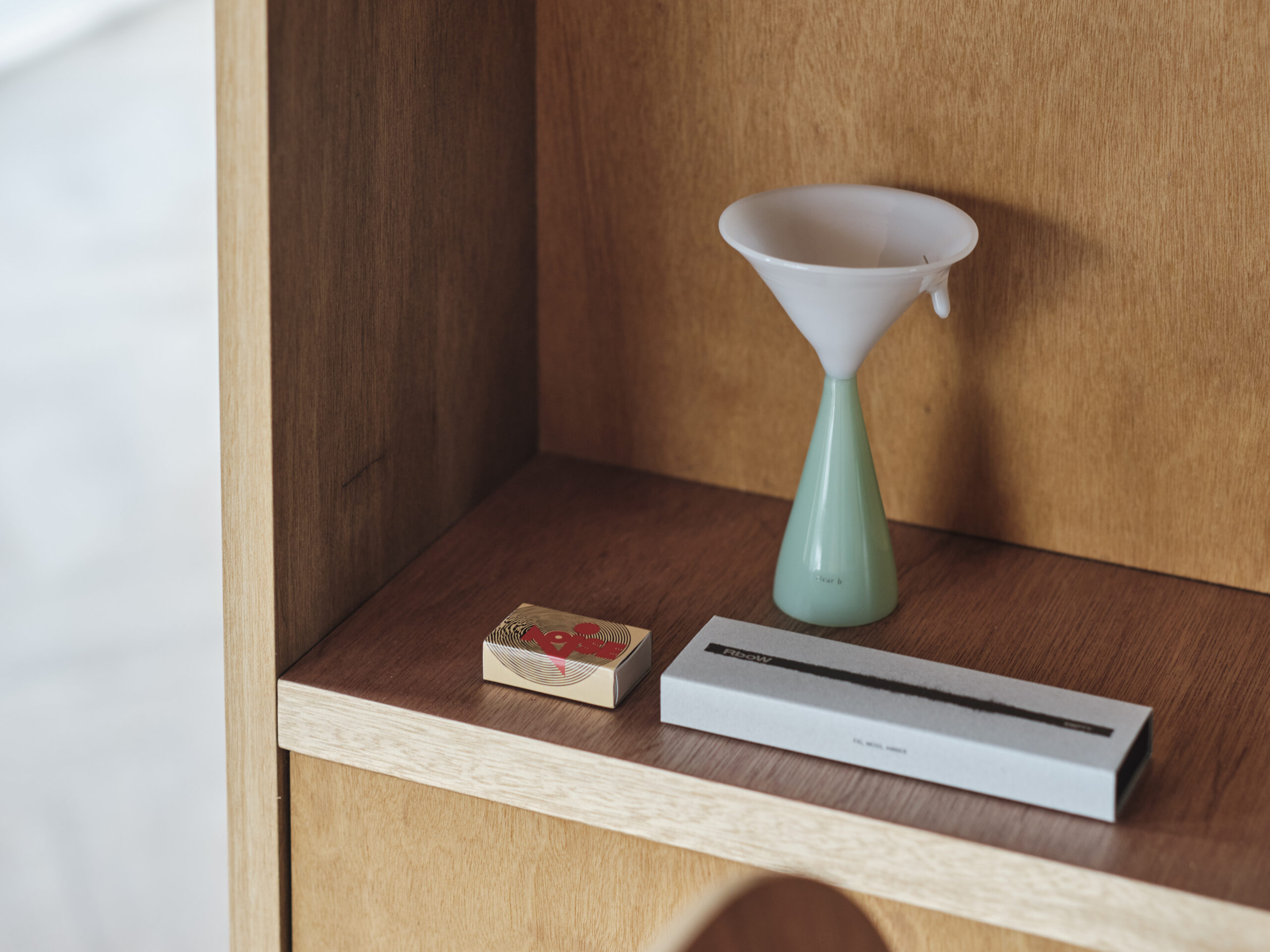
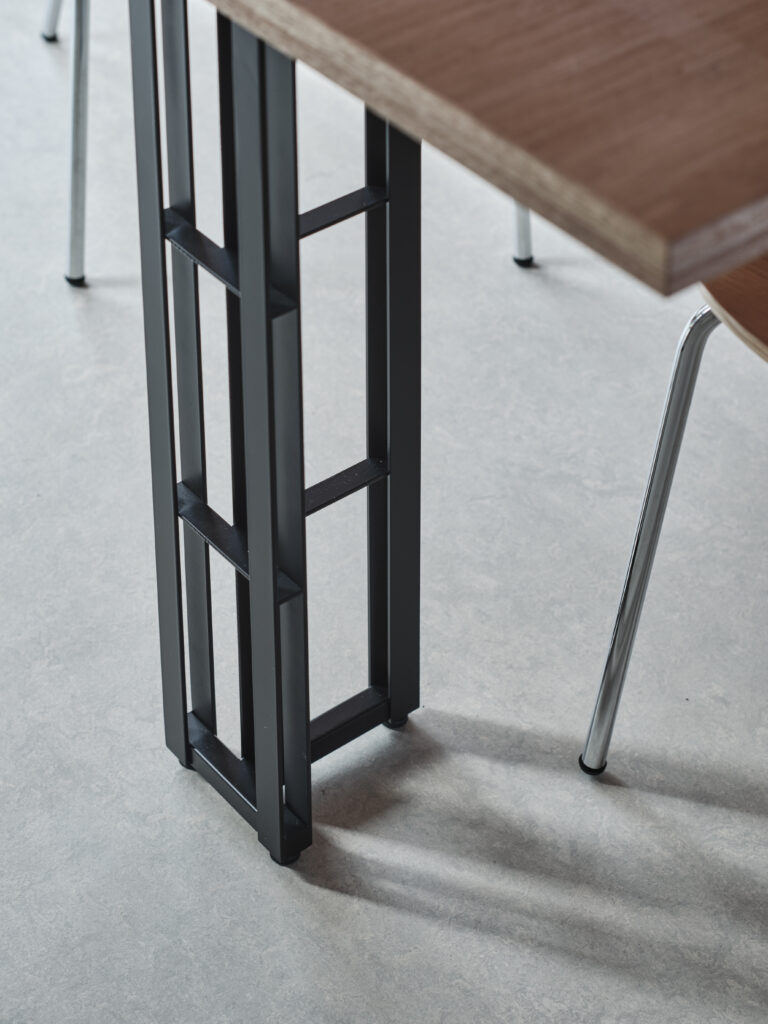
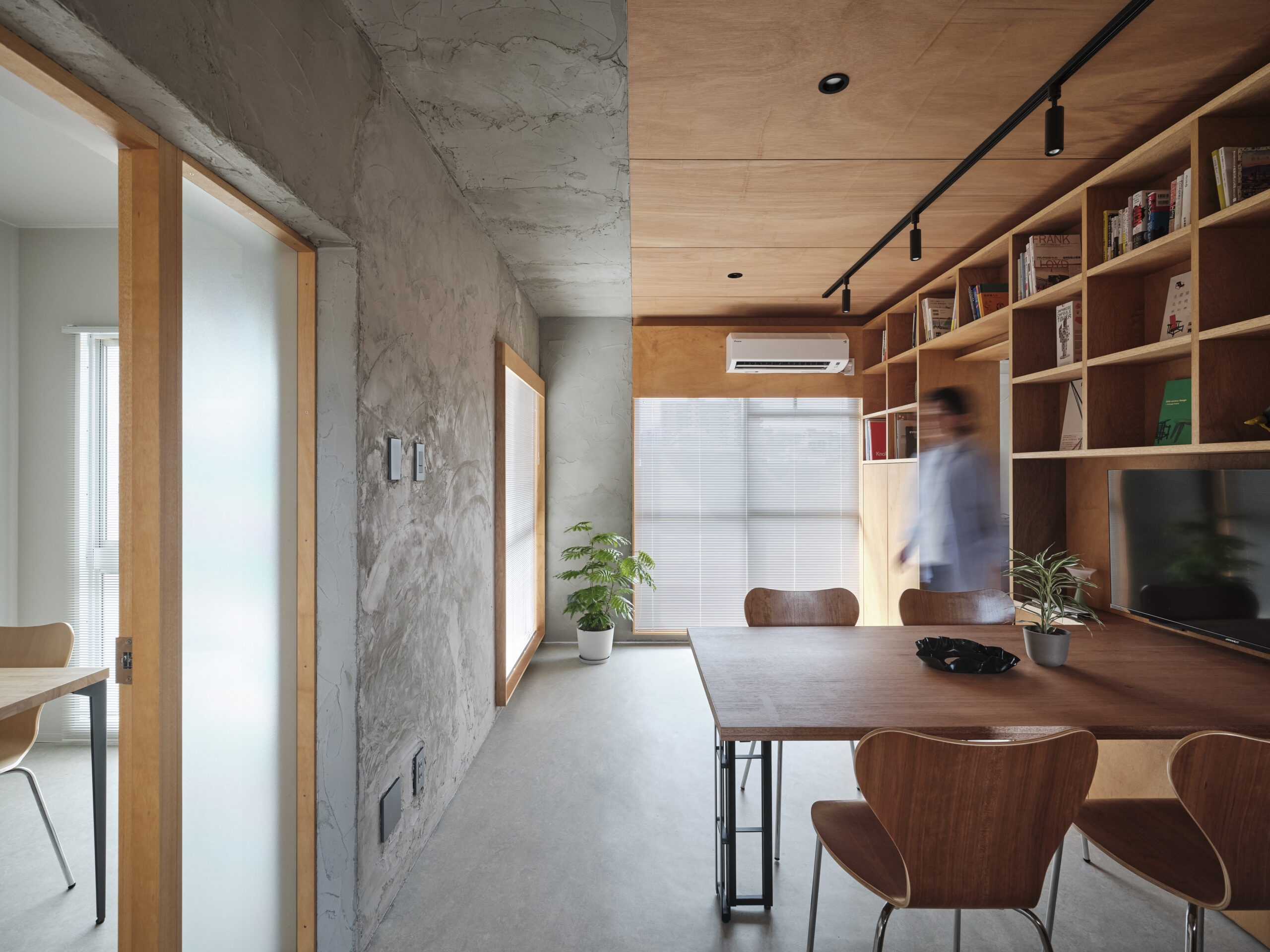
オフィスの中心であるラウンジには、テーブルと展示収納棚を一体化した造作家具を設え、仕事や打ち合わせ、コミュニケーションなど多様な行為を受け止める場とした。
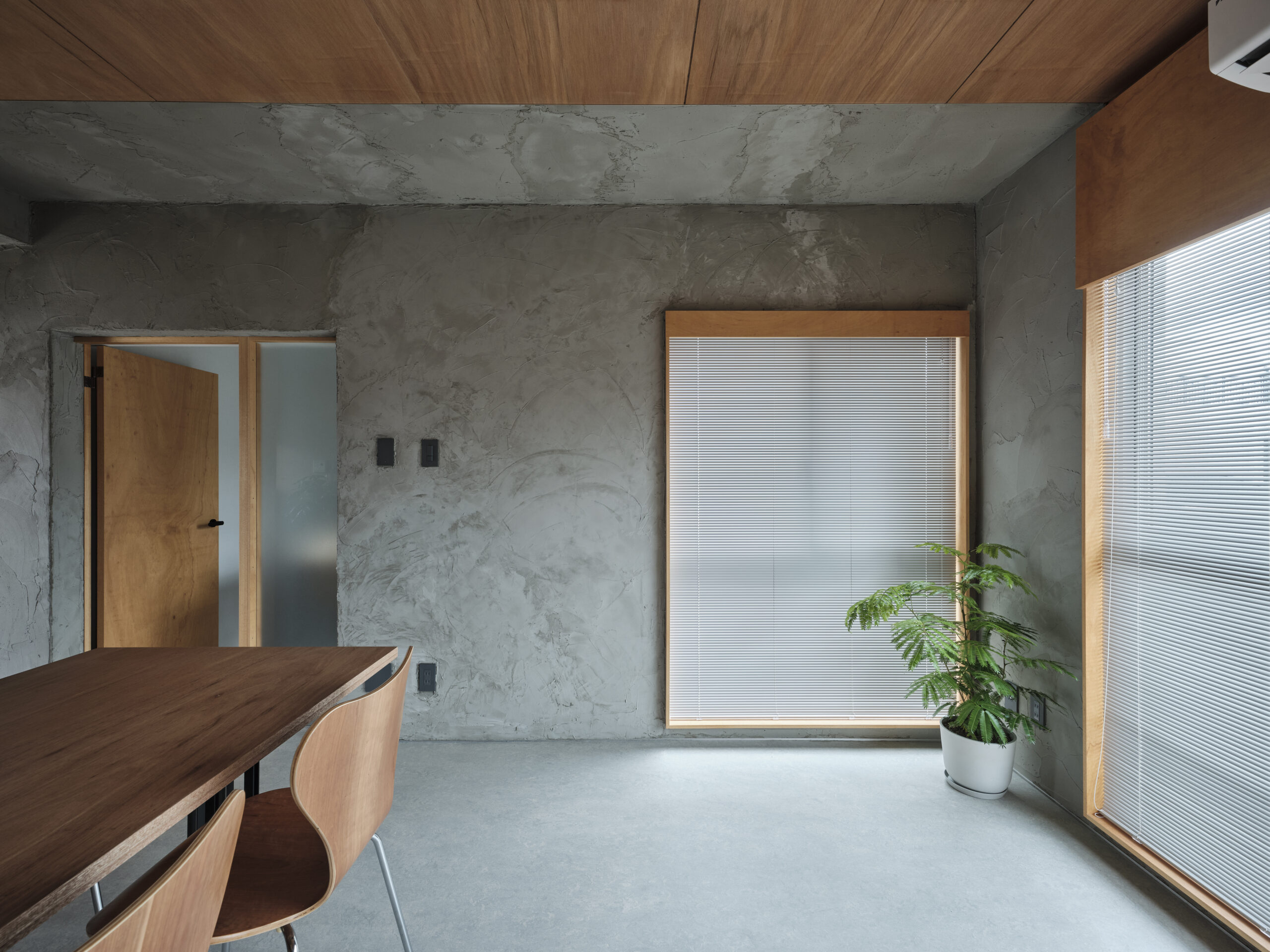
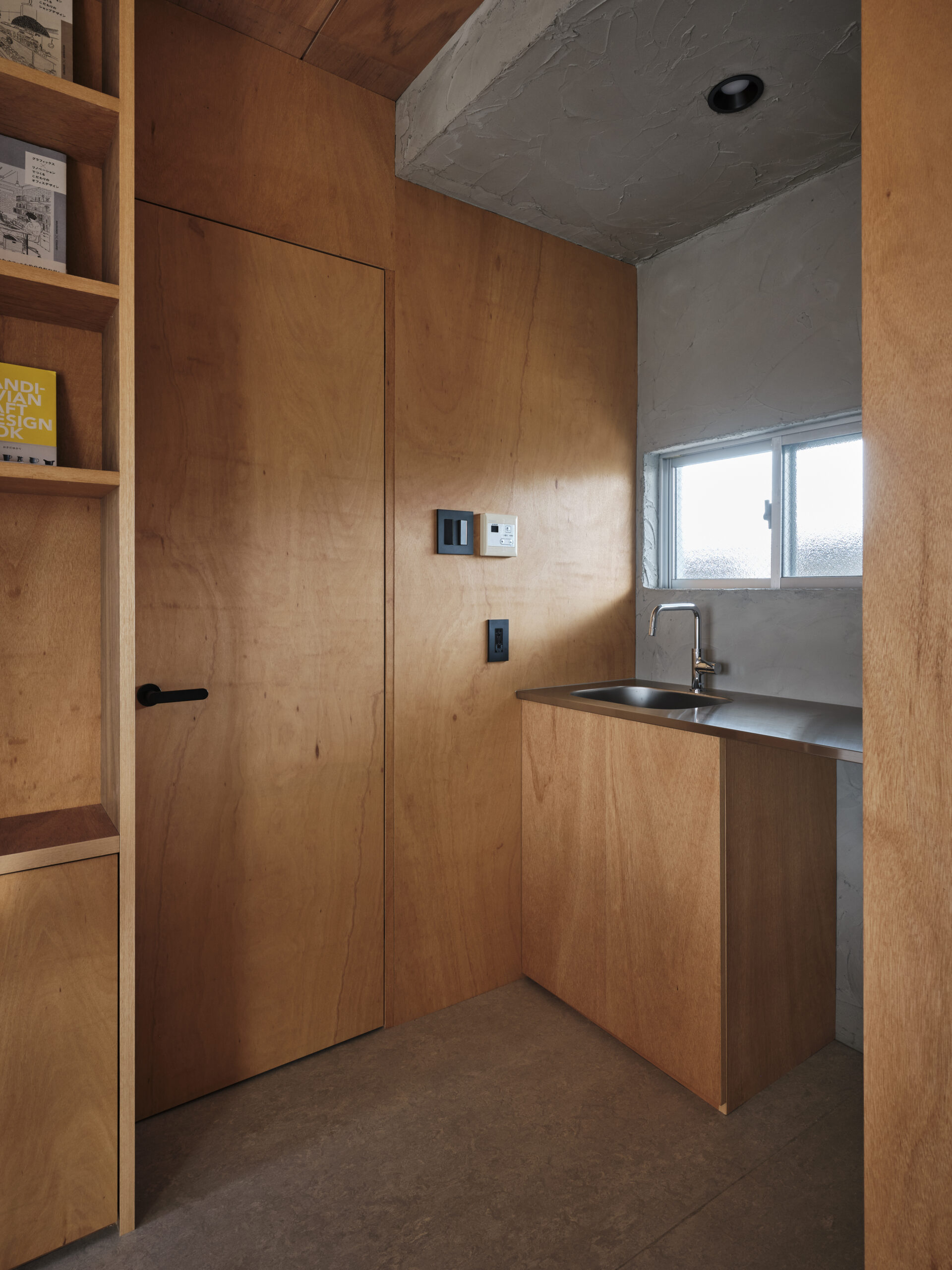
ラワン材による造作家具・壁・天井と、カチオンフィラー左官仕上げの壁・天井を対峙させることで、モノトーンを基調としたワークスペースおよびミーティングルームから見たラウンジがそれぞれ異なる表情を持つ計画としている。空間同士の質の違いに加え、ラウンジを介した接続の在り方そのものに変化を与えている。
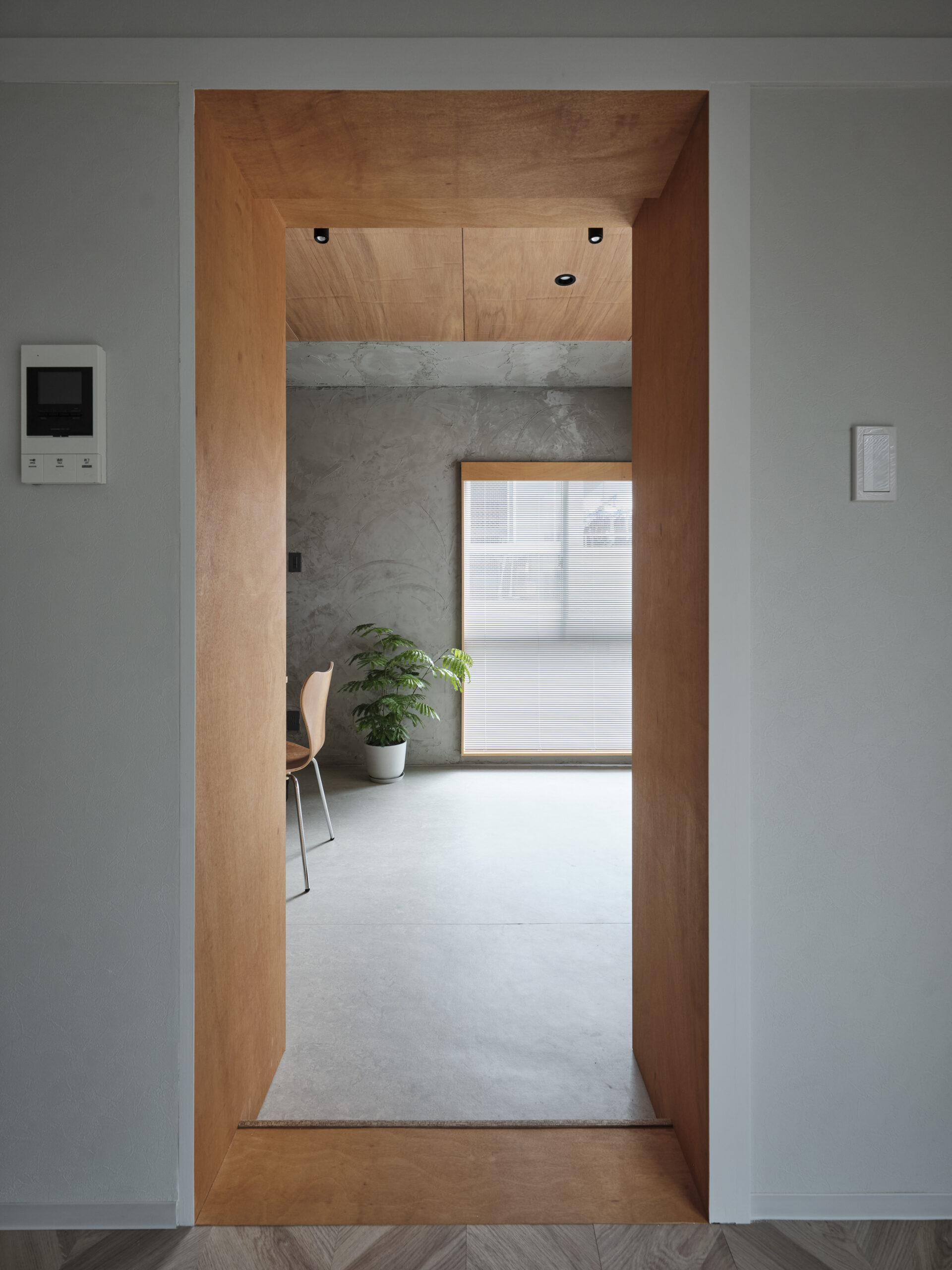
ラウンジとワークスペースの間には扉を設けず、造作家具によって開口の幅や奥行きを調整することで、視線を制御しながら空間の連続性を確保した。
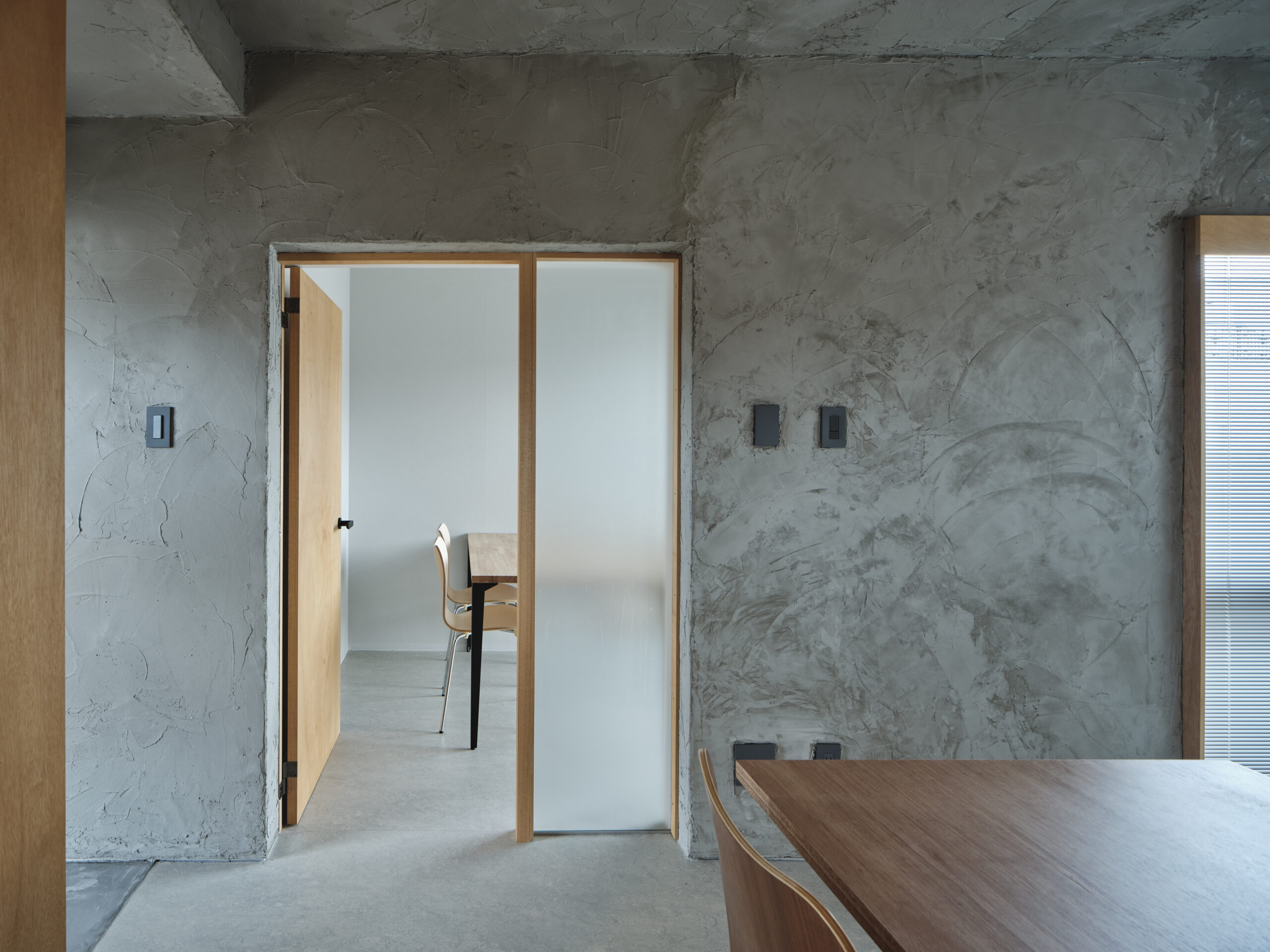
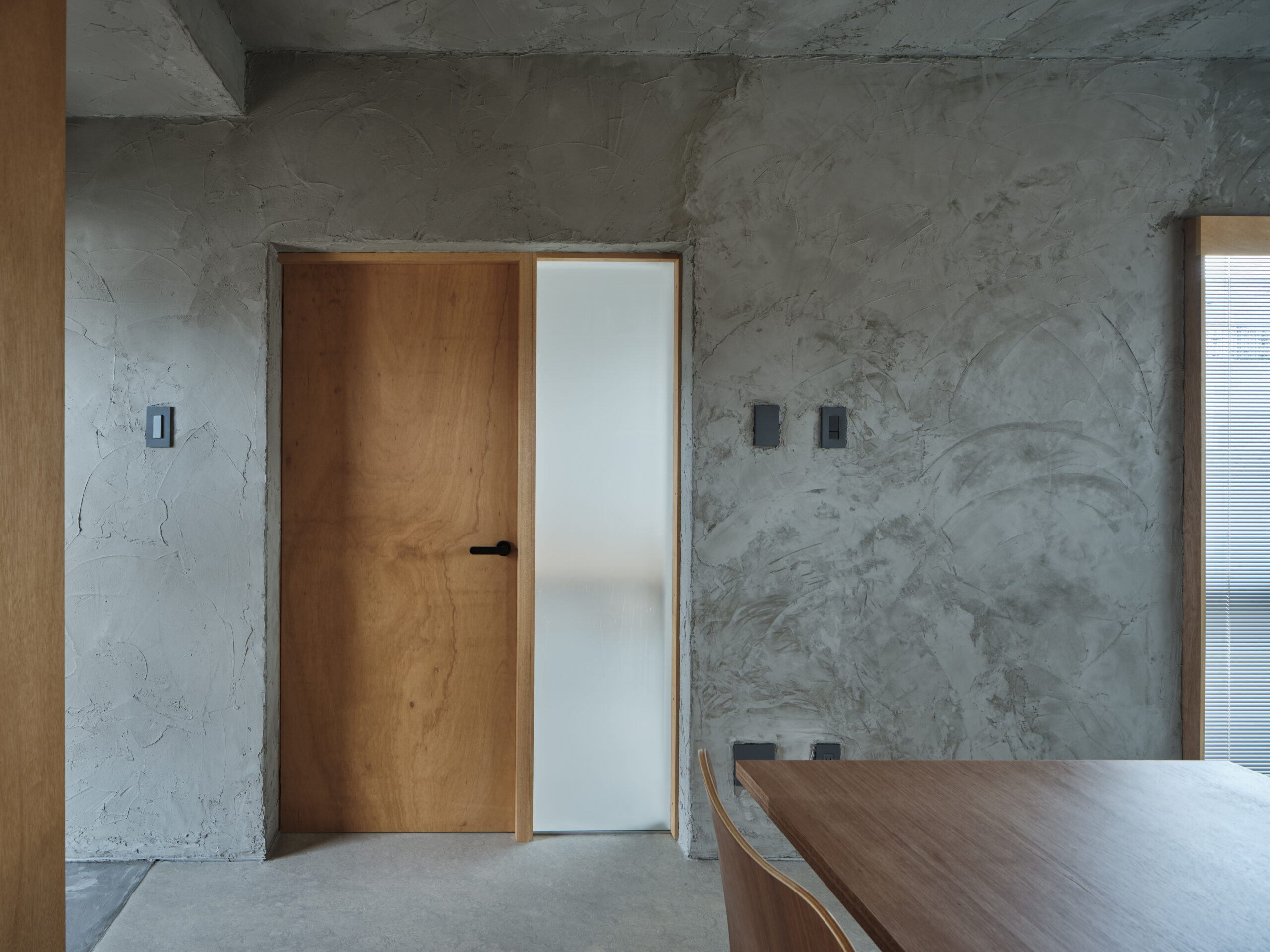
ラウンジとミーティングルームを隔てる建具には半透明ガラスを用い、人の動きや光の移ろいが映り込むことで、空間の奥行きや隣接する気配が感じられる計画としている。ガラス下枠を高さ10mmのアルミ枠とすることで、粗目のテクスチャーを持つ壁面に対して足元を軽やかに見せている。
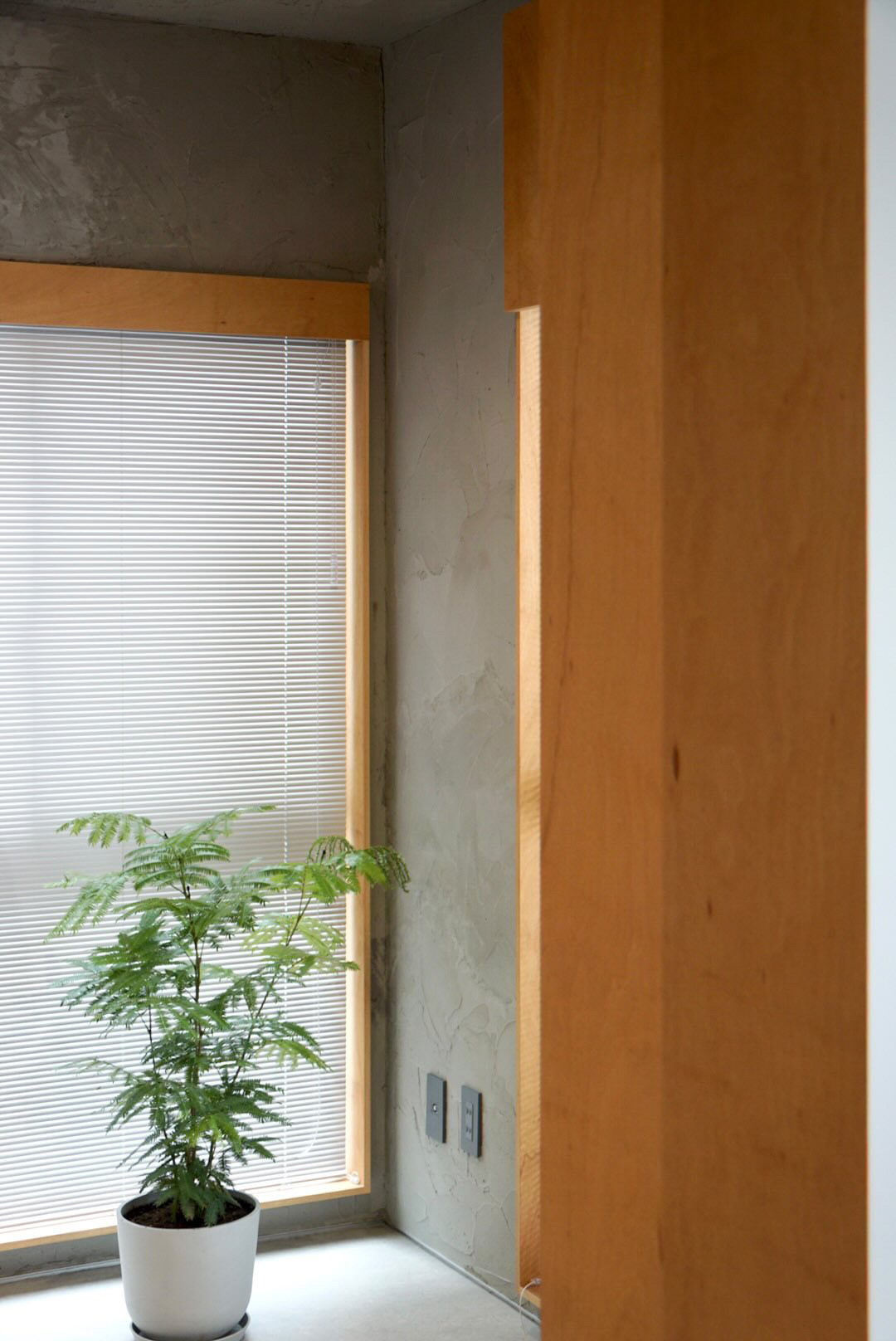
南西向きに配置された4つの窓からは空の景色や午前中の穏やかな光が得られる一方、夕方の西日や隣接住戸との視線関係への配慮が求められた。そこで、既存サッシの存在感を抑えつつ、光・風・視線といった内外を横断する要素を制御する装置として、額縁状のブラインドボックスを設けている。
限られた面積と分節された構成を前提としながら、「横断」という行為を建築的に受け止め、境界や素材、造作家具の操作によって、小さな空間に連続性と密度を与えることを試みた。
This project is a renovation of a 37 m² apartment unit into an office.
The building is a wall-structured reinforced concrete building, and although the original unit was already small in size, it was further subdivided into three compact rooms by structural walls.
The design assigns three functions—workspace, meeting room, and lounge—while maintaining the necessary degree of independence for each. At the same time, the plan seeks to create a loose continuity between the subdivided spaces.
Rather than treating the small, fragmented layout as a limitation, the project focuses on the inevitable crossing of people, sightlines, light, air, sound, and atmosphere, and explores how these crossings can be transformed into spatial quality.
At the center of the office, the lounge is conceived as a spatial core. A custom-built piece of furniture integrating a table and display and storage elements accommodates a range of activities, including work, meetings, and communication.
By placing lauan plywood furniture, walls, and ceilings in contrast with cation-filler plaster-finished walls and ceilings, the lounge presents different expressions when viewed from the monochromatic workspace and meeting room. This contrast not only differentiates the character of each space, but also alters the nature of their connection through the lounge.
No door is installed between the lounge and the workspace. Instead, the width and depth of the opening are carefully adjusted through custom furniture, allowing visual control while maintaining spatial continuity.
Translucent glass is used for the partition between the lounge and the meeting room, allowing subtle movements of people and shifts in light to be reflected, creating a sense of depth and an awareness of adjacent spaces.
By detailing the glass with a 10 mm-high aluminum frame only at the bottom, the base is visually lightened in contrast to the surrounding walls with a coarse-textured finish.
Facing southwest, four large windows bring views of the sky and gentle daylight in the morning, while requiring control of strong western sun in the evening as well as privacy toward neighboring units. To address this, frame-like blind boxes are introduced as devices that soften the presence of the existing window sashes while regulating light, air, and sightlines that cross between interior and exterior.
Within a limited floor area and a highly subdivided structure, the project carefully orchestrates boundaries, materials, and custom furniture to accommodate acts of crossing, giving the small spaces a sense of continuity and spatial density.
This project is a renovation of a 37 m² apartment unit into an office.
The building is a wall-structured reinforced concrete building, and although the original unit was already small in size, it was further subdivided into three compact rooms by structural walls.
The design assigns three functions—workspace, meeting room, and lounge—while maintaining the necessary degree of independence for each. At the same time, the plan seeks to create a loose continuity between the subdivided spaces.
Rather than treating the small, fragmented layout as a limitation, the project focuses on the inevitable crossing of people, sightlines, light, air, sound, and atmosphere, and explores how these crossings can be transformed into spatial quality.
At the center of the office, the lounge is conceived as a spatial core. A custom-built piece of furniture integrating a table and display and storage elements accommodates a range of activities, including work, meetings, and communication.
By placing lauan plywood furniture, walls, and ceilings in contrast with cation-filler plaster-finished walls and ceilings, the lounge presents different expressions when viewed from the monochromatic workspace and meeting room. This contrast not only differentiates the character of each space, but also alters the nature of their connection through the lounge.
No door is installed between the lounge and the workspace. Instead, the width and depth of the opening are carefully adjusted through custom furniture, allowing visual control while maintaining spatial continuity.
Translucent glass is used for the partition between the lounge and the meeting room, allowing subtle movements of people and shifts in light to be reflected, creating a sense of depth and an awareness of adjacent spaces.
By detailing the glass with a 10 mm-high aluminum frame only at the bottom, the base is visually lightened in contrast to the surrounding walls with a coarse-textured finish.
Facing southwest, four large windows bring views of the sky and gentle daylight in the morning, while requiring control of strong western sun in the evening as well as privacy toward neighboring units. To address this, frame-like blind boxes are introduced as devices that soften the presence of the existing window sashes while regulating light, air, and sightlines that cross between interior and exterior.
Within a limited floor area and a highly subdivided structure, the project carefully orchestrates boundaries, materials, and custom furniture to accommodate acts of crossing, giving the small spaces a sense of continuity and spatial density.
37㎡のマンション住戸をオフィスへとリノベーションしたプロジェクトである。
建物は壁式RC構造で、既存住戸はもともと小さな面積でありながら、躯体壁によってさらに3つの空間に分節されていた。
計画では、ワークスペース、ミーティングルーム、ラウンジの3つの機能を割り当て、それぞれの独立性を保ちつつ、分節された空間同士が緩やかにつながる構成を目指した。小さく分断された空間という与件に対し、人の動きや視線、光や風、音や気配といった要素が必然的に「横断」することに着目し、その行為そのものを空間の質へと転化することをテーマとしている。
オフィスの中心であるラウンジには、テーブルと展示収納棚を一体化した造作家具を設え、仕事や打ち合わせ、コミュニケーションなど多様な行為を受け止める場とした。
ラワン材による造作家具・壁・天井と、カチオンフィラー左官仕上げの壁・天井を対峙させることで、モノトーンを基調としたワークスペースおよびミーティングルームから見たラウンジがそれぞれ異なる表情を持つ計画としている。空間同士の質の違いに加え、ラウンジを介した接続の在り方そのものに変化を与えている。
ラウンジとワークスペースの間には扉を設けず、造作家具によって開口の幅や奥行きを調整することで、視線を制御しながら空間の連続性を確保した。
ラウンジとミーティングルームを隔てる建具には半透明ガラスを用い、人の動きや光の移ろいが映り込むことで、空間の奥行きや隣接する気配が感じられる計画としている。ガラス下枠を高さ10mmのアルミ枠とすることで、粗目のテクスチャーを持つ壁面に対して足元を軽やかに見せている。
南西向きに配置された4つの窓からは空の景色や午前中の穏やかな光が得られる一方、夕方の西日や隣接住戸との視線関係への配慮が求められた。そこで、既存サッシの存在感を抑えつつ、光・風・視線といった内外を横断する要素を制御する装置として、額縁状のブラインドボックスを設けている。
限られた面積と分節された構成を前提としながら、「横断」という行為を建築的に受け止め、境界や素材、造作家具の操作によって、小さな空間に連続性と密度を与えることを試みた。