
自邸である築50年のRC造集合住宅の一室を改修したリノベーションプロジェクト。
住戸は道路と駐車場に面し、明るく開けた眺望を有するとともに、街路樹であるイチョウの樹冠がちょうど窓の高さに位置し、季節の移ろいを身近に感じられる環境にある。
この恵まれた光環境と眺望をリビングや寝室といった主要な居室に最大限取り込むため、居室を外壁側に、水回りを住戸の内側に集約するシンプルな構成としている。
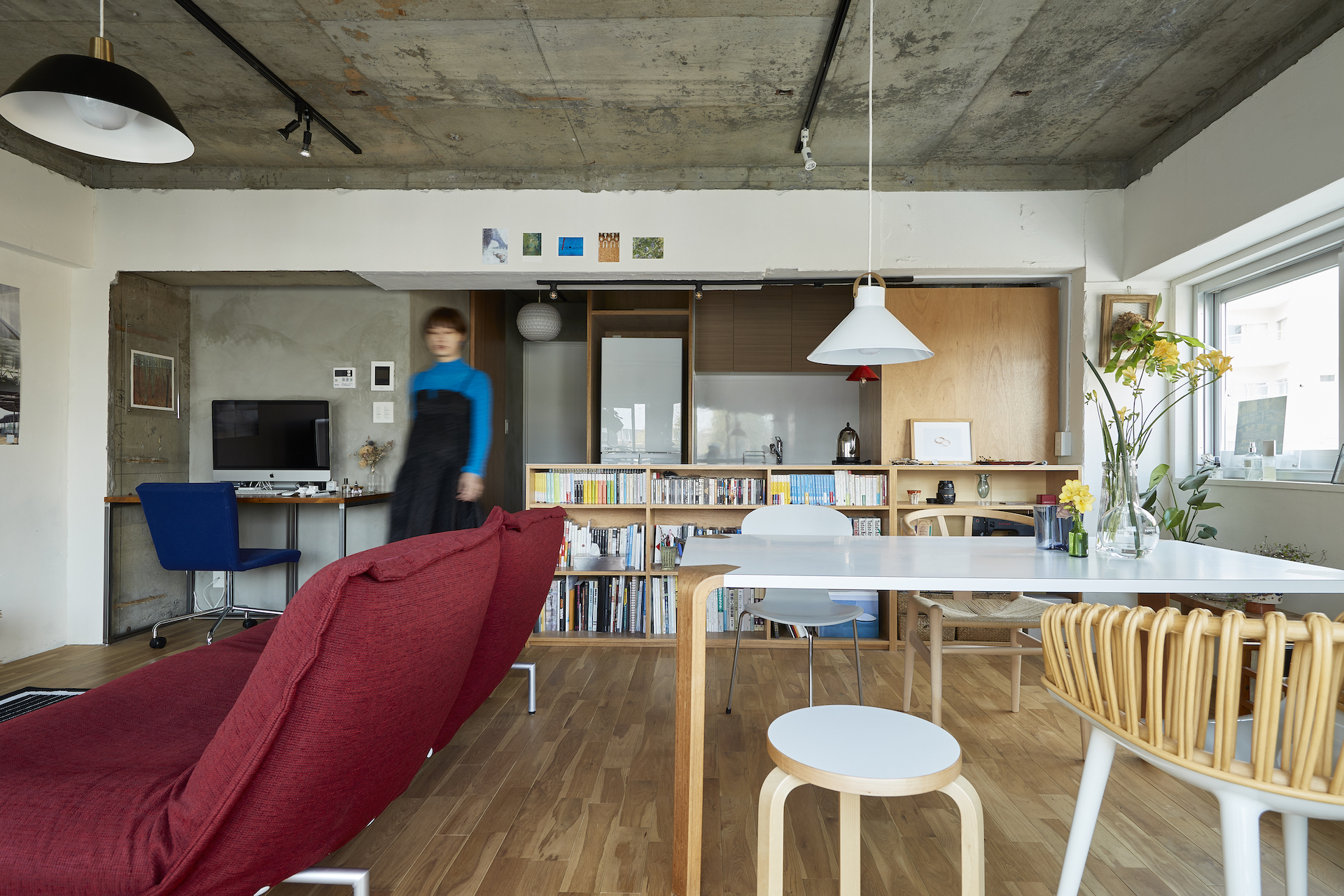
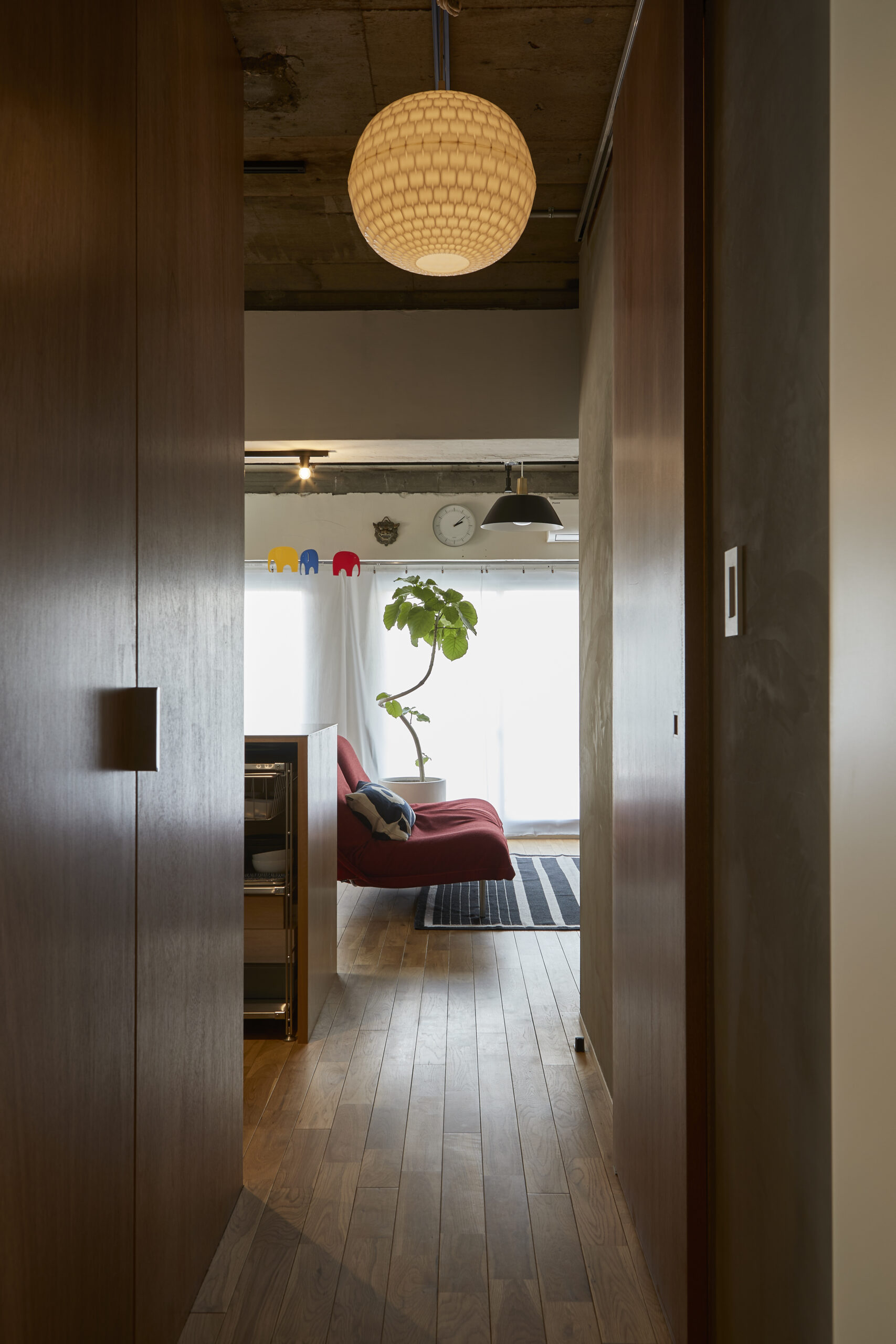
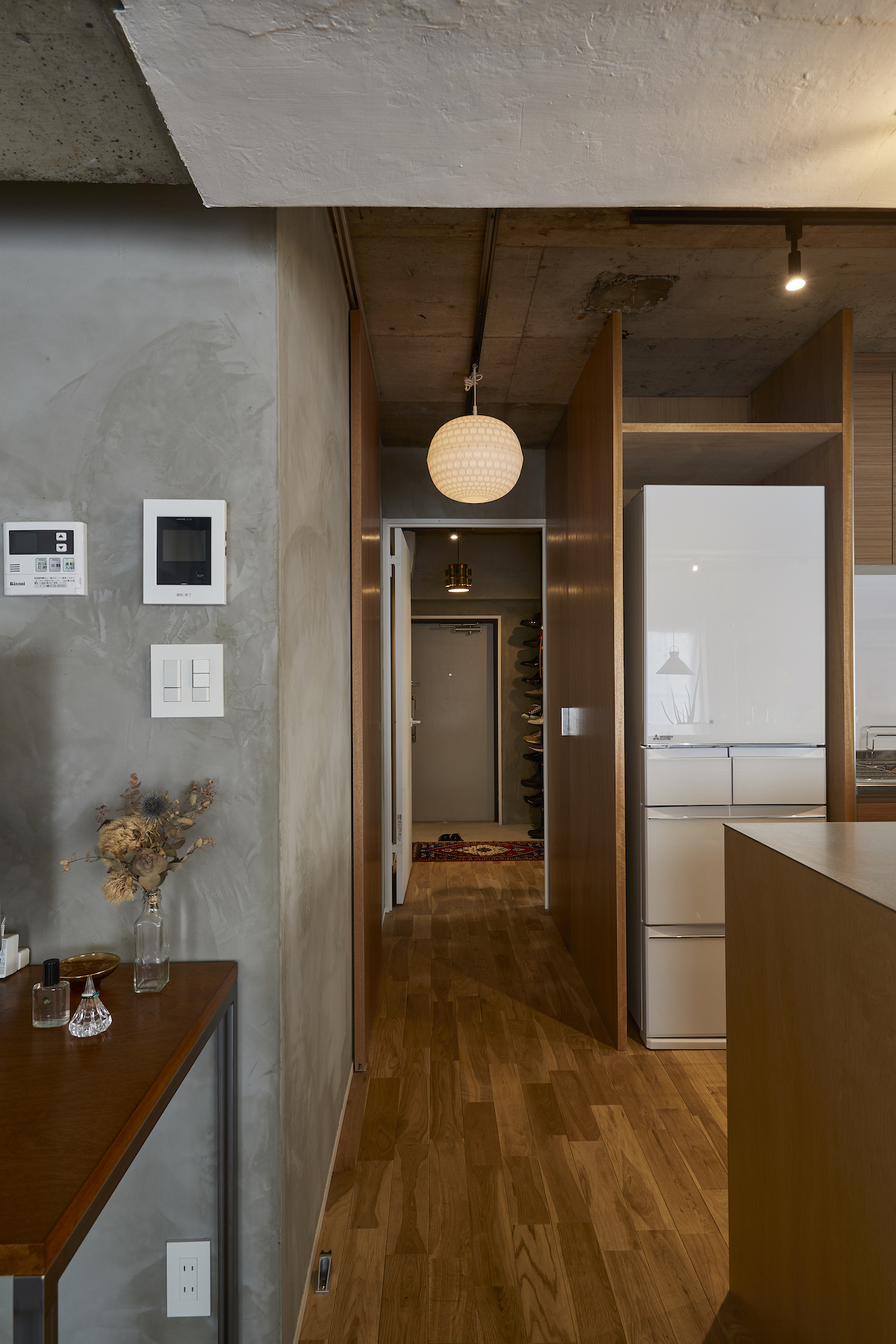
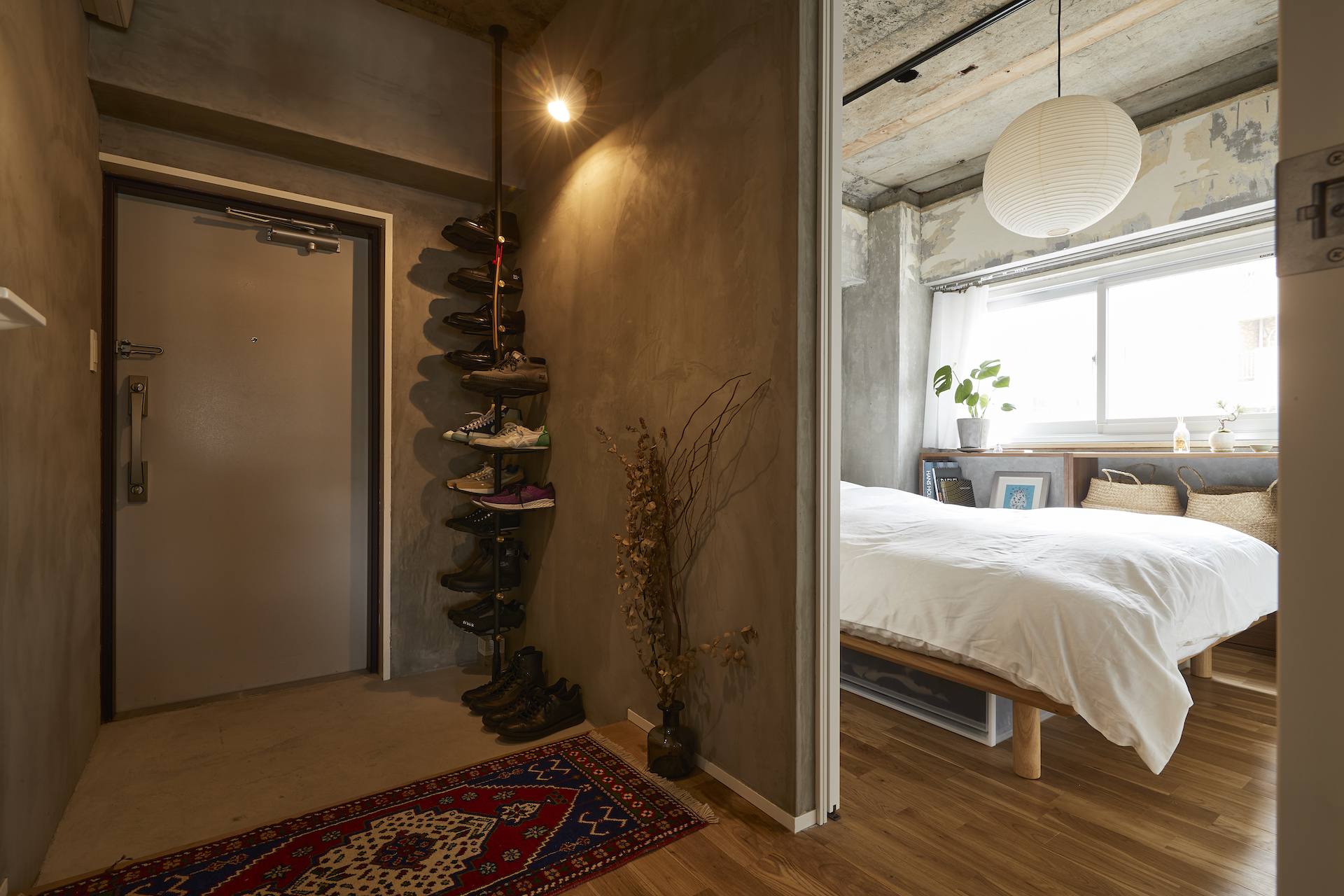
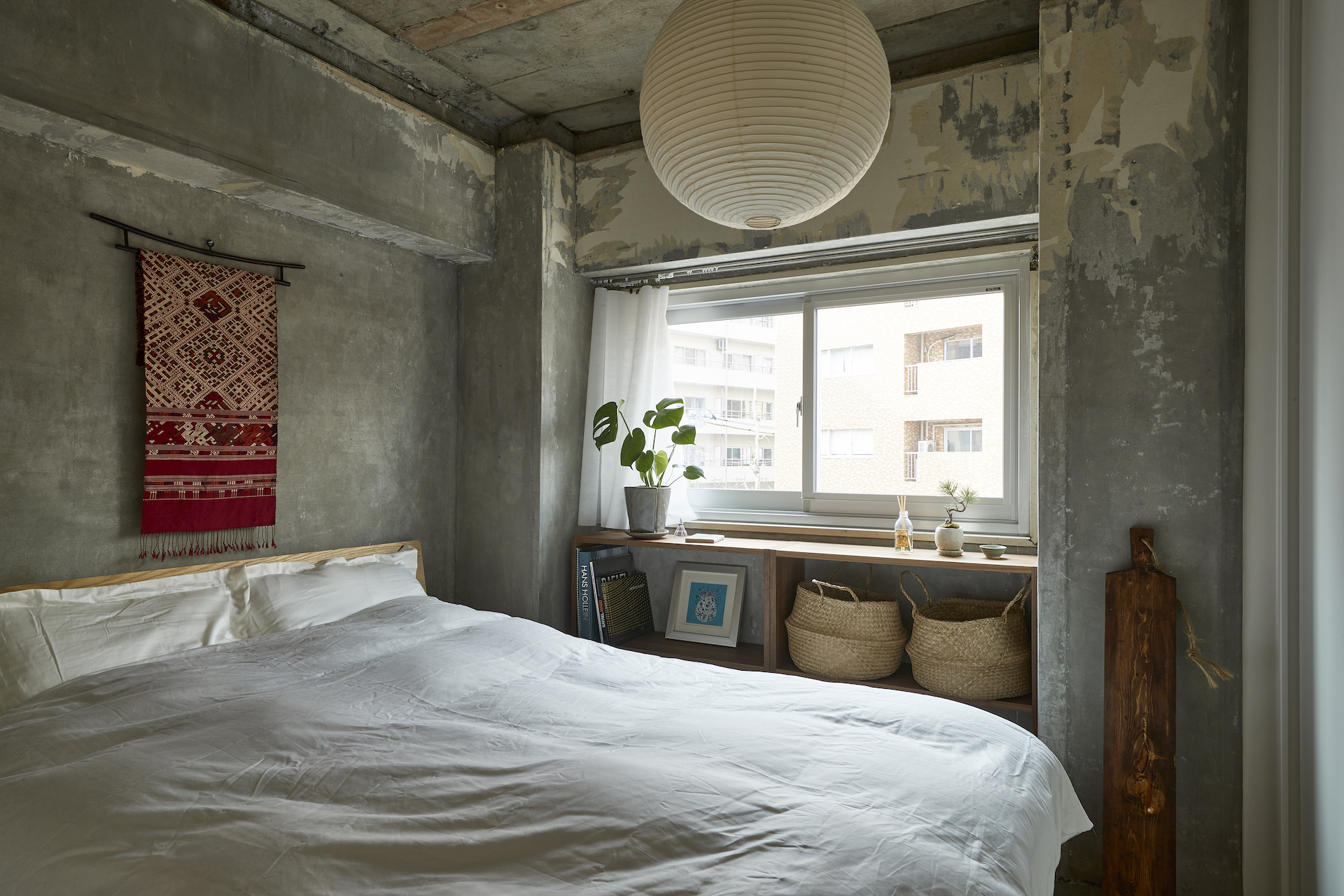
リビングは白塗装の壁と不織布カーテンによって外光を柔らかく拡散させ、できるだけ大きく確保したリビングダイニング空間に、四季を通じて変化するイチョウや空の景色を取り込む開放的な場としている。一方、廊下や玄関など外光が入りにくく、身体と壁との距離が近づく領域では、モルタル左官の壁や木製建具といった質感の際立つ素材に加え、装飾的なデザイン照明を取り入れることで、居室との明暗のバランスを丁寧に調整している。
明暗や素材の単純な対比にとどまらず、空間の奥行やスケールに応じたわずかな差異を重ねることで、コンパクトな住戸に緩やかな変化を与えている。
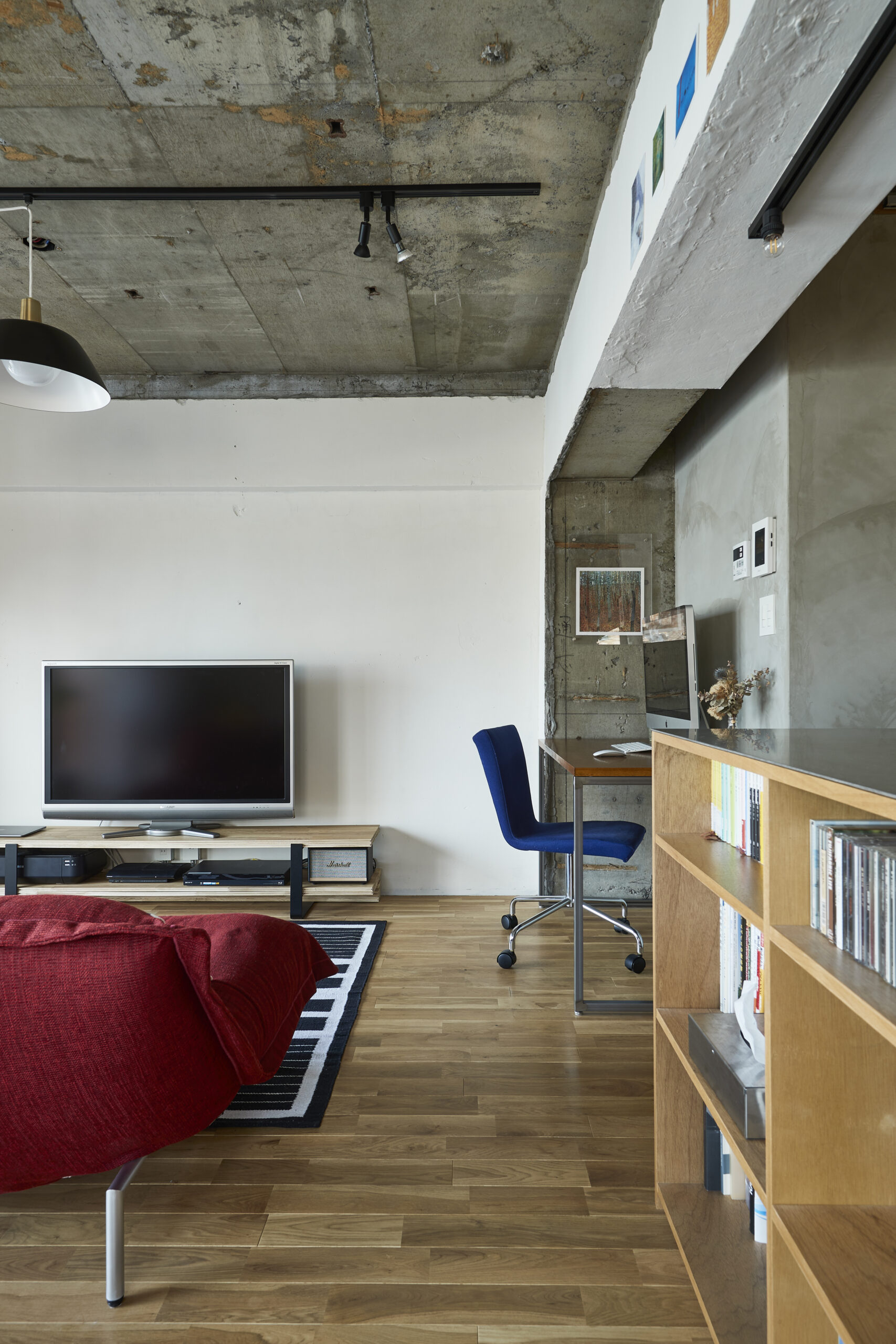
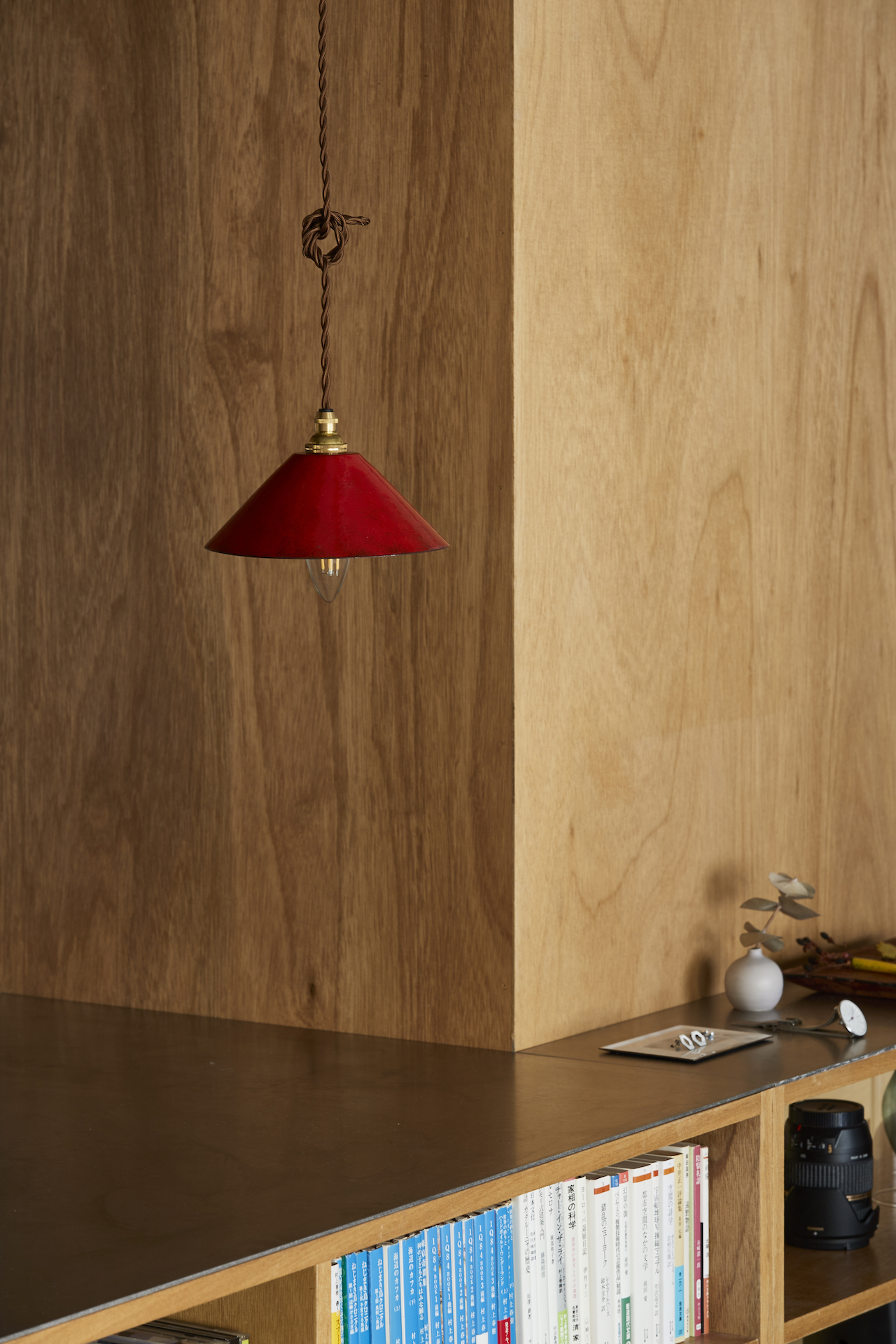
リビングの中心となる造作カウンターは、ラワン合板とステンレス天板で構成し、カウンター下はリビング側を書棚、キッチン側を既製ラック収納とすることで、機能性とコストバランスを両立している。
This project is a renovation of a unit in a 50-year-old reinforced concrete apartment building, designed as the architect’s own residence.
The apartment faces a street and a parking area, offering open views and abundant daylight. At the same time, the canopy of a ginkgo tree aligns with the height of the windows, creating an environment in which the changing seasons can be experienced at close range.
To maximize these favorable light conditions and views in the primary living spaces, such as the living room and bedroom, the plan adopts a simple layout in which the living spaces are placed along the exterior wall, while the wet areas are consolidated toward the interior of the unit.
In the living room, white-painted walls and non-woven fabric curtains softly diffuse daylight, allowing the seasonal scenery of the ginkgo tree and the sky to be drawn into a generously sized living–dining space, conceived as an open and expansive setting.
In contrast, in areas such as the corridor and entrance, where natural light is limited and the distance between the body and the walls becomes closer, the balance of brightness is carefully adjusted through the use of tactile materials—such as mortar-finished walls and wooden joinery—together with lighting with a decorative quality.
Rather than relying on a simple contrast of light and dark or of materials, subtle differences are layered in response to spatial depth and scale, introducing gentle variations within the compact dwelling.
At the center of the living space, a custom-built counter made of lauan plywood with a stainless steel top serves as a key element. Bookshelves are integrated on the living side, while standardized rack storage is provided on the kitchen side, achieving a balance between functionality and cost efficiency.
This project is a renovation of a unit in a 50-year-old reinforced concrete apartment building, designed as the architect’s own residence.
The apartment faces a street and a parking area, offering open views and abundant daylight. At the same time, the canopy of a ginkgo tree aligns with the height of the windows, creating an environment in which the changing seasons can be experienced at close range.
To maximize these favorable light conditions and views in the primary living spaces, such as the living room and bedroom, the plan adopts a simple layout in which the living spaces are placed along the exterior wall, while the wet areas are consolidated toward the interior of the unit.
In the living room, white-painted walls and non-woven fabric curtains softly diffuse daylight, allowing the seasonal scenery of the ginkgo tree and the sky to be drawn into a generously sized living–dining space, conceived as an open and expansive setting.
In contrast, in areas such as the corridor and entrance, where natural light is limited and the distance between the body and the walls becomes closer, the balance of brightness is carefully adjusted through the use of tactile materials—such as mortar-finished walls and wooden joinery—together with lighting with a decorative quality.
Rather than relying on a simple contrast of light and dark or of materials, subtle differences are layered in response to spatial depth and scale, introducing gentle variations within the compact dwelling.
At the center of the living space, a custom-built counter made of lauan plywood with a stainless steel top serves as a key element. Bookshelves are integrated on the living side, while standardized rack storage is provided on the kitchen side, achieving a balance between functionality and cost efficiency.
自邸である築50年のRC造集合住宅の一室を改修したリノベーションプロジェクト。
住戸は道路と駐車場に面し、明るく開けた眺望を有するとともに、街路樹であるイチョウの樹冠がちょうど窓の高さに位置し、季節の移ろいを身近に感じられる環境にある。
この恵まれた光環境と眺望をリビングや寝室といった主要な居室に最大限取り込むため、居室を外壁側に、水回りを住戸の内側に集約するシンプルな構成としている。
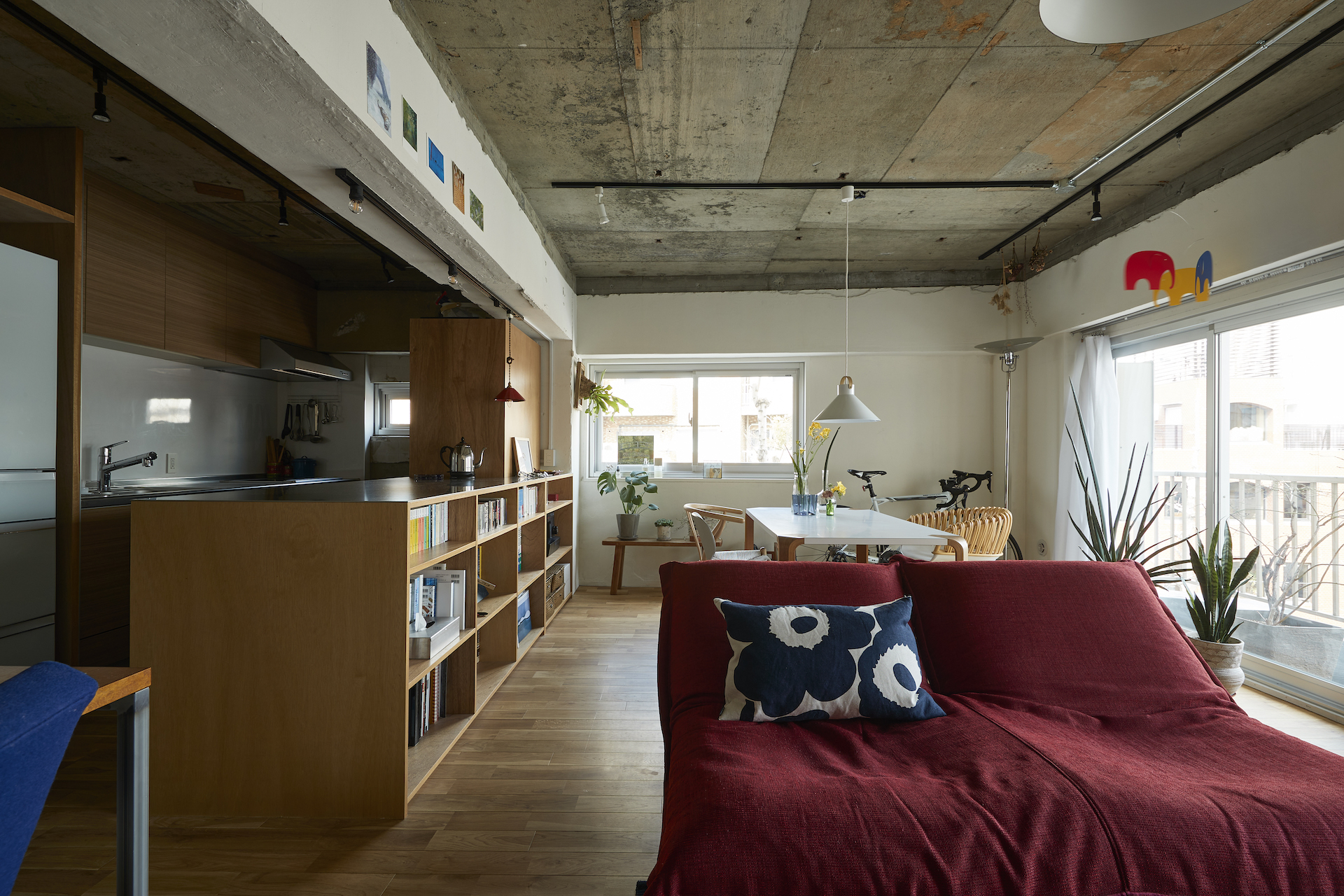
リビングは白塗装の壁と不織布カーテンによって外光を柔らかく拡散させ、できるだけ大きく確保したリビングダイニング空間に、四季を通じて変化するイチョウや空の景色を取り込む開放的な場としている。一方、廊下や玄関など外光が入りにくく、身体と壁との距離が近づく領域では、モルタル左官の壁や木製建具といった質感の際立つ素材に加え、装飾的なデザイン照明を取り入れることで、居室との明暗のバランスを丁寧に調整している。
明暗や素材の単純な対比にとどまらず、空間の奥行やスケールに応じたわずかな差異を重ねることで、コンパクトな住戸に緩やかな変化を与えている。
リビングの中心となる造作カウンターは、ラワン合板とステンレス天板で構成し、カウンター下はリビング側を書棚、キッチン側を既製ラック収納とすることで、機能性とコストバランスを両立している。