渋谷区「公園便所設計等業務委託(笹塚公園)公募型プロポーザル方式事業者選定」応募案
作品タイトル:風車がひらく、公園と街の明るいトイレ
笹塚公園は、隣接する保育園とあわせて地域の子どもたちにとって身近な遊び場であると同時に、南北の通りをつなぐ生活動線として、幅広い世代が行き交う場である。本計画は、「きれいに使う・使いたくなるトイレ」を実現するため、新しいトイレの整備を契機として、暗く閉鎖的な印象の公園を開放的に整え、誰もが明るく安心して立ち寄れる環境を目指した。
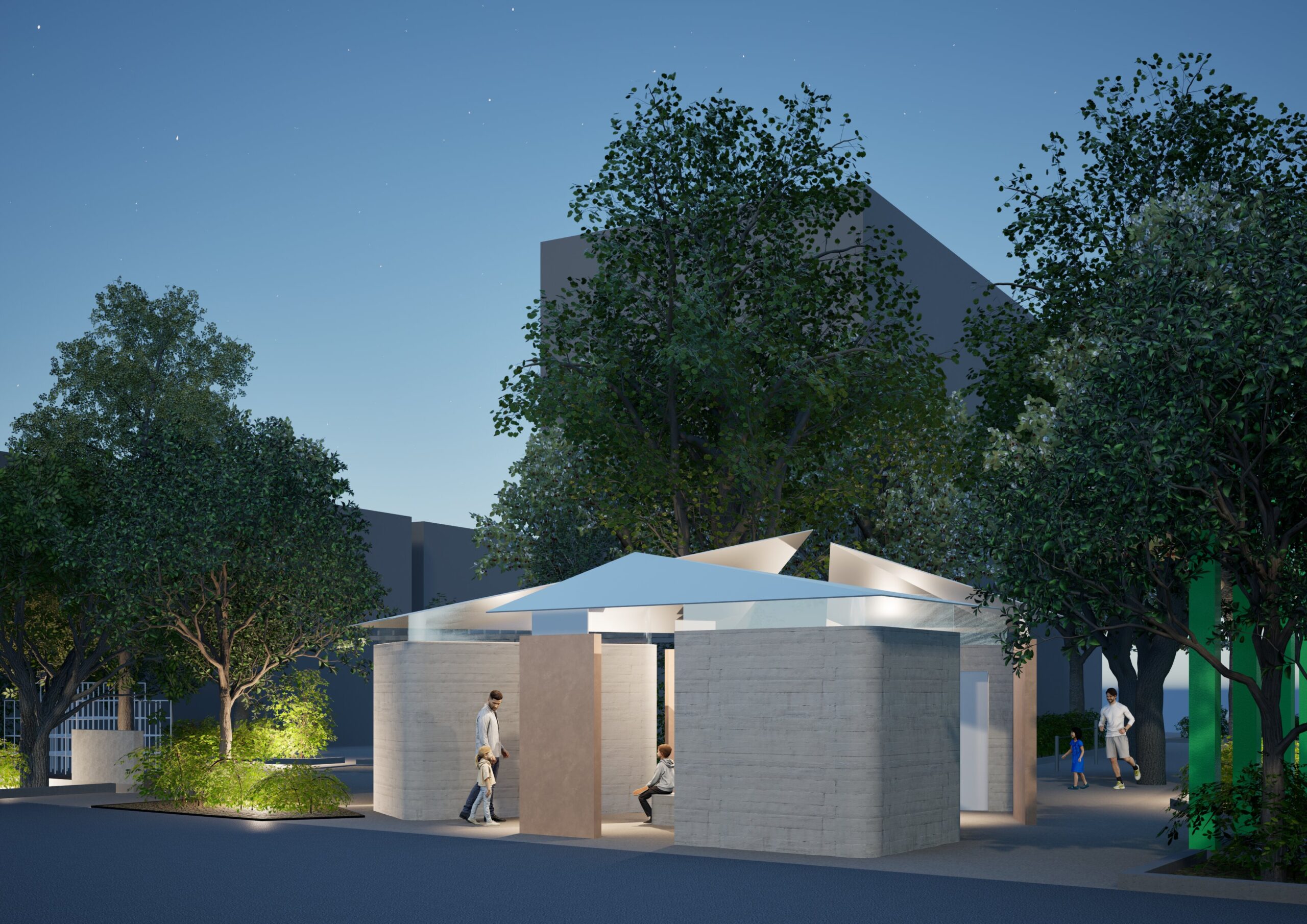
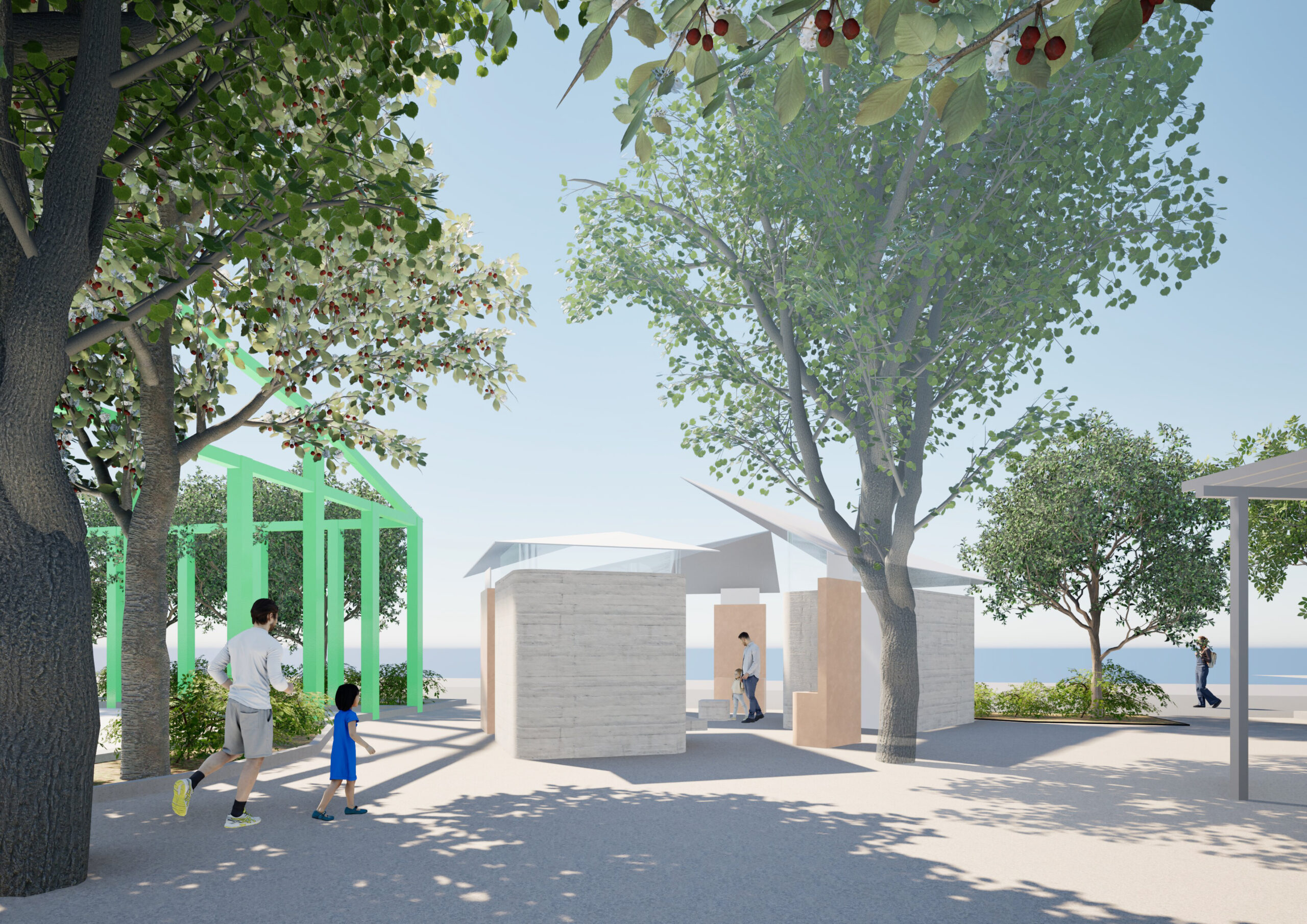
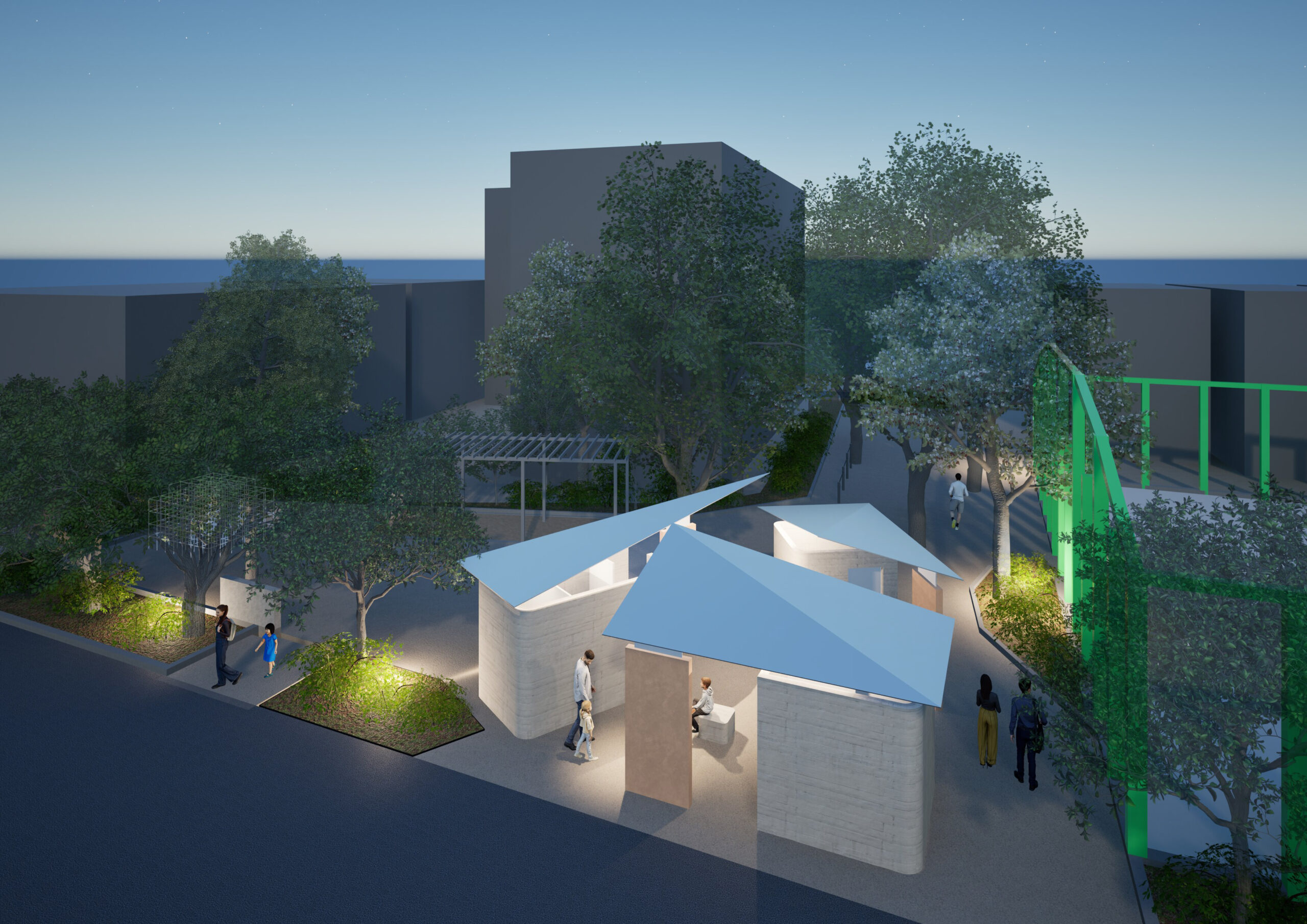
配置計画は、トイレを公園と街にひらかれた存在として位置づけることを主眼とし、男子・女子・だれでもトイレの三棟を風車状に配置することで、どの方向からも自然にアプローチできる開かれた構成としている。三棟のずれが適度な抜けと視線の広がりを生み、公園のまわりを行き交う人々に対しても、明るく気軽に立ち寄りやすい佇まいと回遊性を与える。
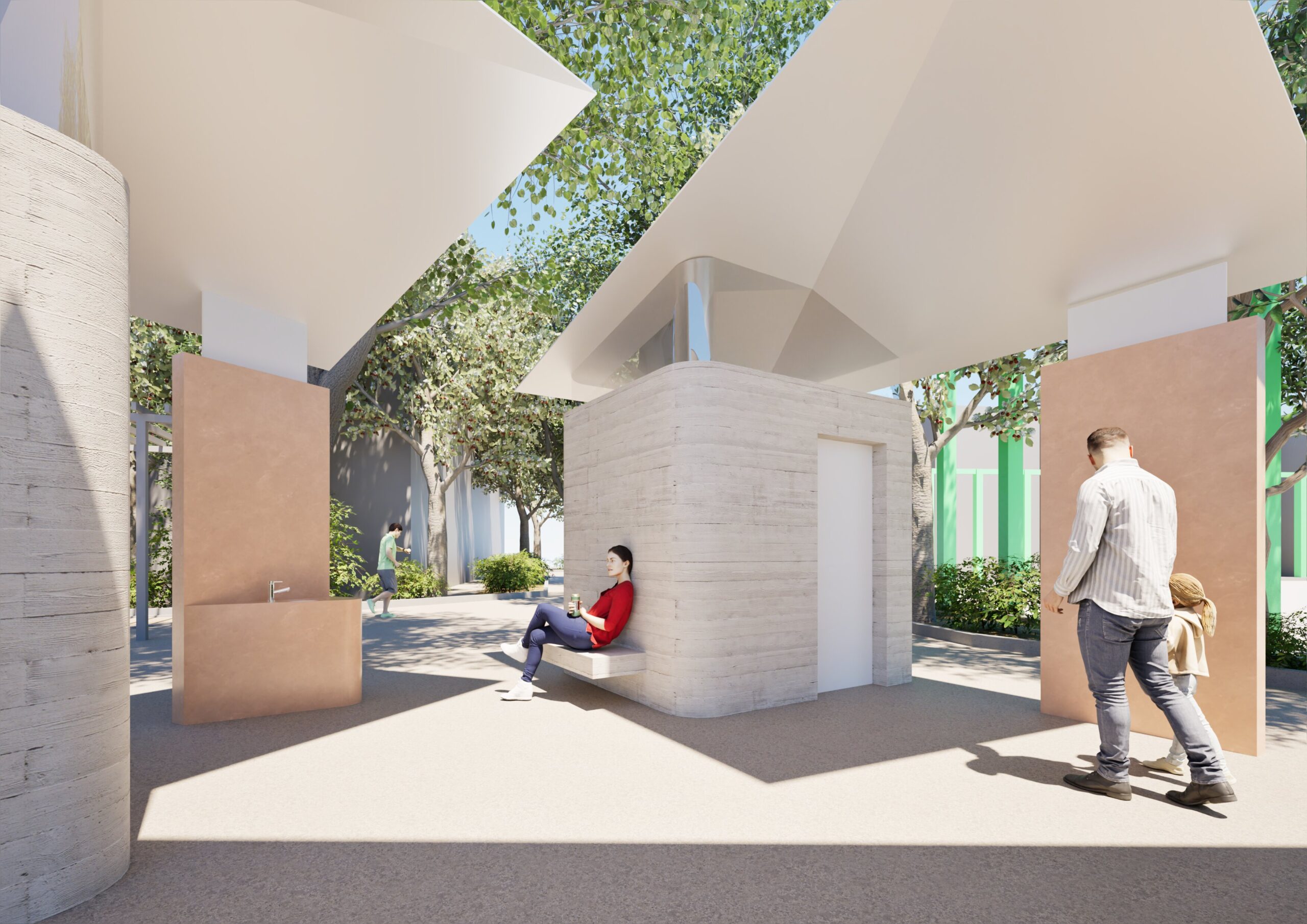
三棟の中央には、手洗いやベンチを備えた前庭空間を設け、光と風が通り抜ける半屋外の場を形成した。適度に囲われたこの空間が、通り抜けや小休憩、手洗いといった行為を受け止めることで、自然と「丁寧に使いたくなる」意識を喚起する公共空間となっている。
各個室へは前庭を介してアプローチする構成とし、公園から直接入り込む心理的な抵抗感を和らげている。LGBTQを含む多様な利用者が、ストレスなく利用できるトイレを目指した。
適度に囲われながらも視線が抜ける構成は、死角をつくらず夜間の防犯性を高めている。だれでもトイレは車いすやベビーカーに配慮した動線とし、男女の個室にもベビーベッドやベビーチェアを備えることで、多様な利用に対応した。三棟を分散配置することで、音や匂いの干渉を抑え、落ち着いて利用できる環境を確保している。
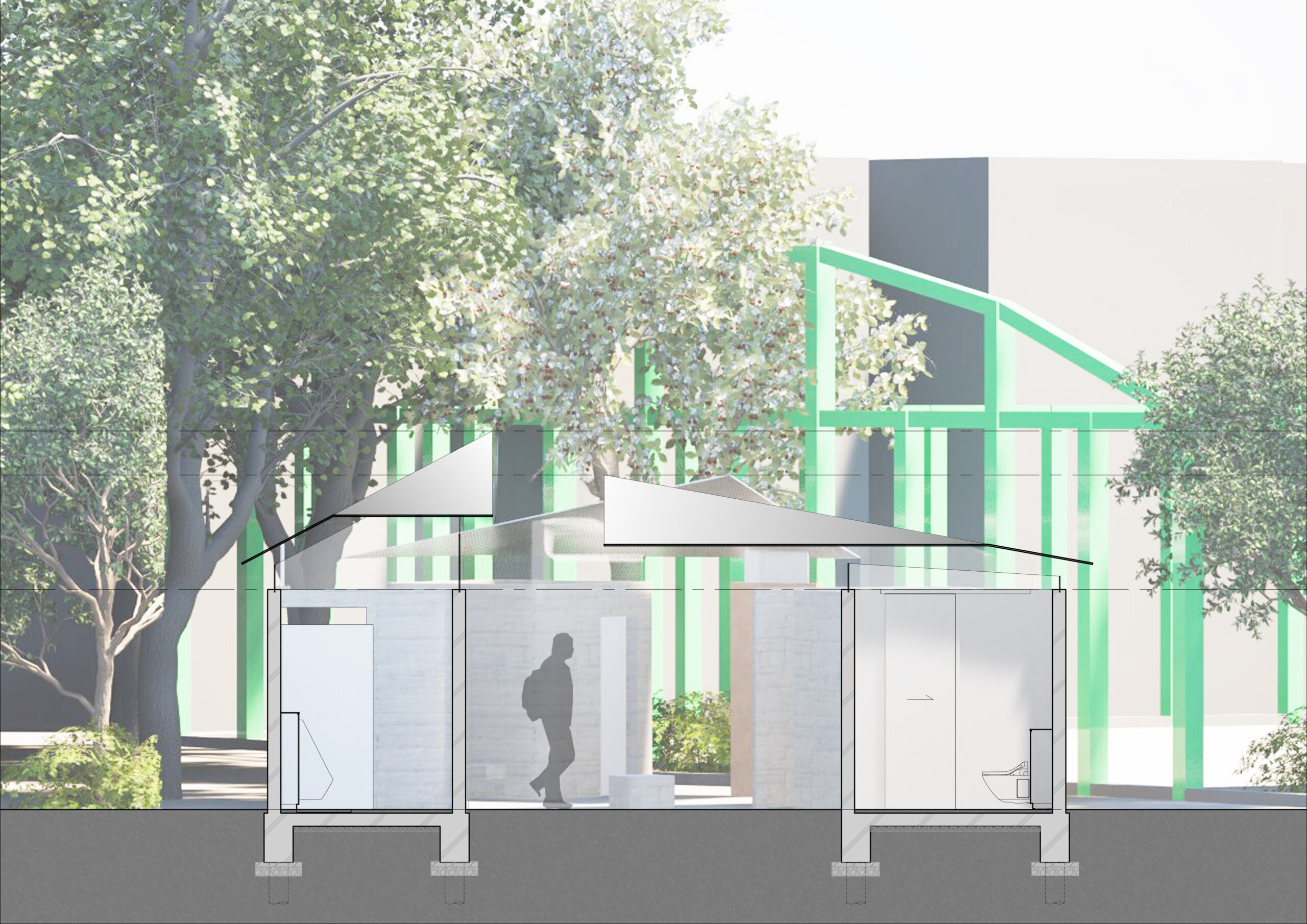
建築はRC壁に鉄板屋根を載せたシンプルな構成とした。外壁には杉板型枠コンクリート打ち放し仕上を採用し、公園の自然環境との調和を図るとともに、壁面の凹凸によって落書きの抑制を図っている。清掃性・耐久性・メンテナンス性にも配慮し、長く使われる公共施設を目指した。
Sasazuka Park serves both as a familiar playground for local children, together with the adjacent nursery school, and as a daily pedestrian route linking the north–south streets of the neighborhood, used by people of all generations. This project takes the construction of a new public toilet as an opportunity to transform a previously dark and closed-off area of the park into an open and welcoming environment—one where anyone can stop by with a sense of ease and safety. The aim was to create a toilet that people naturally want to keep clean and feel inclined to use with care.
The site planning positions the toilet as an open presence within the park and the surrounding streets. The three volumes are arranged in a pinwheel-like configuration—kazaguruma in Japanese—opening the toilet to the park and the surrounding streets from all directions. The slight displacement of the three buildings creates visual openness and permeability, giving rise to a bright and approachable presence that encourages movement and circulation through the park.
At the center of the three volumes, a forecourt furnished with washbasins and benches forms a semi-outdoor space where light and wind freely pass through. Gently enclosed yet open, this space accommodates activities such as passing through, taking a short rest, or washing one’s hands, and functions as a public space that subtly encourages thoughtful and considerate use.
Each toilet cubicle is approached through this forecourt, easing the psychological resistance of entering directly from the park. The facility is designed to be comfortably usable by a wide range of people, including LGBTQ users, without stress or hesitation.
While moderately enclosed, the composition maintains clear sightlines, eliminating blind spots and enhancing safety at night. The all-gender toilet is planned with circulation suitable for wheelchair users and strollers, and baby beds and baby chairs are provided in the men’s and women’s cubicles to accommodate diverse needs. By distributing the functions across three separate volumes, interference from sound and odor is minimized, ensuring a calm and comfortable environment.
Architecturally, the building adopts a simple composition of reinforced concrete walls topped with steel plate roofs. The exterior is finished in board-formed exposed concrete, harmonizing with the natural character of the park while the textured surface helps deter graffiti. Considerations for cleanliness, durability, and ease of maintenance support the creation of a public facility intended for long-term use.
Sasazuka Park serves both as a familiar playground for local children, together with the adjacent nursery school, and as a daily pedestrian route linking the north–south streets of the neighborhood, used by people of all generations. This project takes the construction of a new public toilet as an opportunity to transform a previously dark and closed-off area of the park into an open and welcoming environment—one where anyone can stop by with a sense of ease and safety. The aim was to create a toilet that people naturally want to keep clean and feel inclined to use with care.
The site planning positions the toilet as an open presence within the park and the surrounding streets. The three volumes are arranged in a pinwheel-like configuration—kazaguruma in Japanese—opening the toilet to the park and the surrounding streets from all directions. The slight displacement of the three buildings creates visual openness and permeability, giving rise to a bright and approachable presence that encourages movement and circulation through the park.
At the center of the three volumes, a forecourt furnished with washbasins and benches forms a semi-outdoor space where light and wind freely pass through. Gently enclosed yet open, this space accommodates activities such as passing through, taking a short rest, or washing one’s hands, and functions as a public space that subtly encourages thoughtful and considerate use.
Each toilet cubicle is approached through this forecourt, easing the psychological resistance of entering directly from the park. The facility is designed to be comfortably usable by a wide range of people, including LGBTQ users, without stress or hesitation.
While moderately enclosed, the composition maintains clear sightlines, eliminating blind spots and enhancing safety at night. The all-gender toilet is planned with circulation suitable for wheelchair users and strollers, and baby beds and baby chairs are provided in the men’s and women’s cubicles to accommodate diverse needs. By distributing the functions across three separate volumes, interference from sound and odor is minimized, ensuring a calm and comfortable environment.
Architecturally, the building adopts a simple composition of reinforced concrete walls topped with steel plate roofs. The exterior is finished in board-formed exposed concrete, harmonizing with the natural character of the park while the textured surface helps deter graffiti. Considerations for cleanliness, durability, and ease of maintenance support the creation of a public facility intended for long-term use.
渋谷区「公園便所設計等業務委託(笹塚公園)公募型プロポーザル方式事業者選定」応募案
作品タイトル:風車がひらく、公園と街の明るいトイレ
笹塚公園は、隣接する保育園とあわせて地域の子どもたちにとって身近な遊び場であると同時に、南北の通りをつなぐ生活動線として、幅広い世代が行き交う場である。本計画は、「きれいに使う・使いたくなるトイレ」を実現するため、新しいトイレの整備を契機として、暗く閉鎖的な印象の公園を開放的に整え、誰もが明るく安心して立ち寄れる環境を目指した。
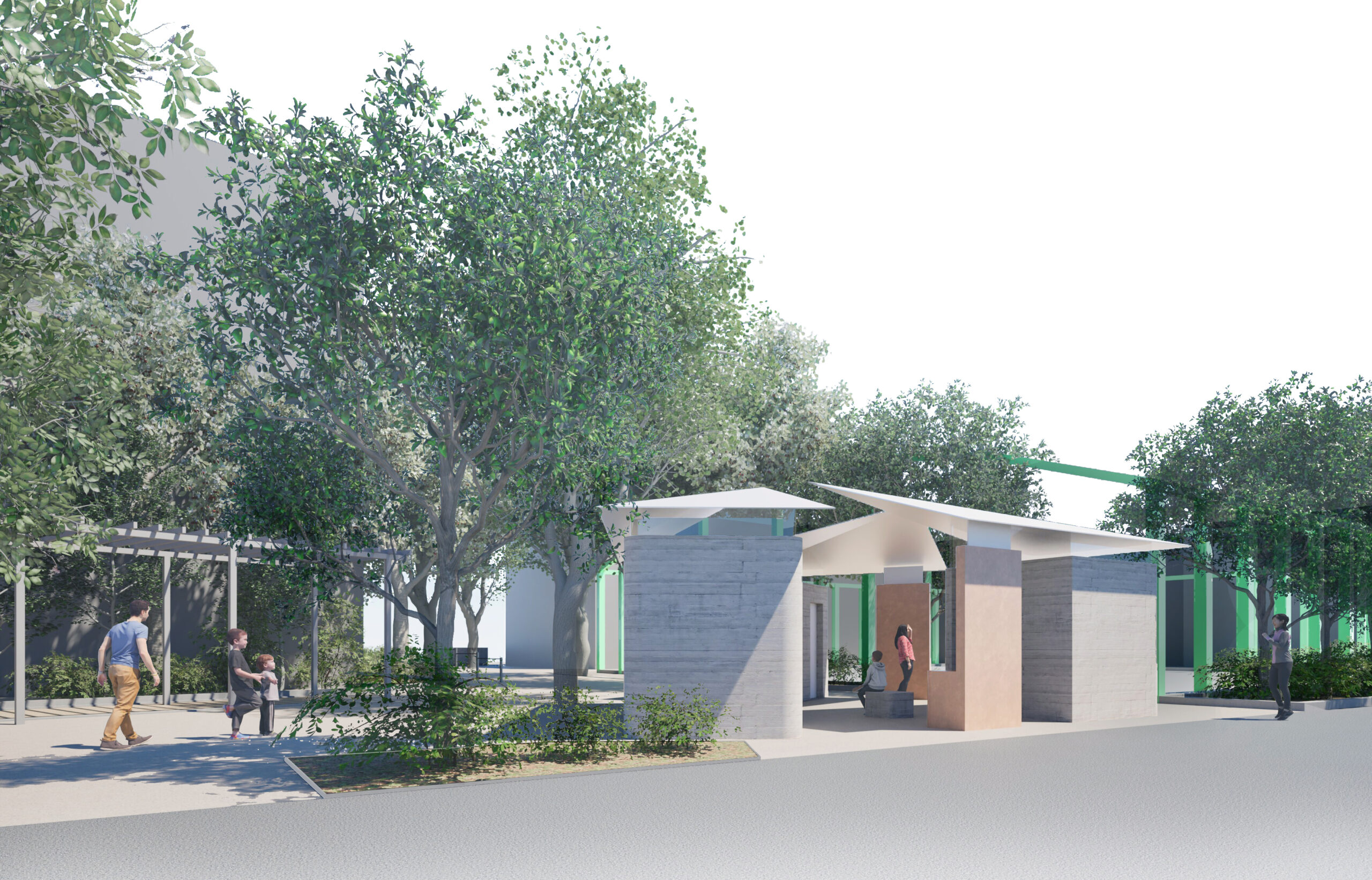
配置計画は、トイレを公園と街にひらかれた存在として位置づけることを主眼とし、男子・女子・だれでもトイレの三棟を風車状に配置することで、どの方向からも自然にアプローチできる開かれた構成としている。三棟のずれが適度な抜けと視線の広がりを生み、公園のまわりを行き交う人々に対しても、明るく気軽に立ち寄りやすい佇まいと回遊性を与える。
三棟の中央には、手洗いやベンチを備えた前庭空間を設け、光と風が通り抜ける半屋外の場を形成した。適度に囲われたこの空間が、通り抜けや小休憩、手洗いといった行為を受け止めることで、自然と「丁寧に使いたくなる」意識を喚起する公共空間となっている。
各個室へは前庭を介してアプローチする構成とし、公園から直接入り込む心理的な抵抗感を和らげている。LGBTQを含む多様な利用者が、ストレスなく利用できるトイレを目指した。
適度に囲われながらも視線が抜ける構成は、死角をつくらず夜間の防犯性を高めている。だれでもトイレは車いすやベビーカーに配慮した動線とし、男女の個室にもベビーベッドやベビーチェアを備えることで、多様な利用に対応した。三棟を分散配置することで、音や匂いの干渉を抑え、落ち着いて利用できる環境を確保している。
建築はRC壁に鉄板屋根を載せたシンプルな構成とした。外壁には杉板型枠コンクリート打ち放し仕上を採用し、公園の自然環境との調和を図るとともに、壁面の凹凸によって落書きの抑制を図っている。清掃性・耐久性・メンテナンス性にも配慮し、長く使われる公共施設を目指した。